




Welcome Back!
Link Building – something you’ve probably come across before? Or maybe just “backlinks“?
Link building is one of the most debated topics in online marketing and is a significant part of SEO (Search Engine Optimization).
But what does link building actually mean, and how does it work in practice?
This is a complete guide to learning link building quickly. Sit back and learn how to build links effectively.
What is link building and how does it work?
Imagine the whole internet as one big library with a vast collection of books. When you want to read a new book, you search on Google for a topic – but how does Google determine which book you should choose? The same applies to a website; this is called internal link building.
Now, imagine that you receive a recommendation from a friend, your mother, or even a stranger on the street.
Which recommendation matters most?
Google works similarly, often defined by the term “PageRank.”
However, Google uses many more factors than just links to evaluate a website. In fact, Google uses more than 200 factors to assess a website’s value and then rank it accordingly in its organic search results.
Factors That Influence Your Visibility
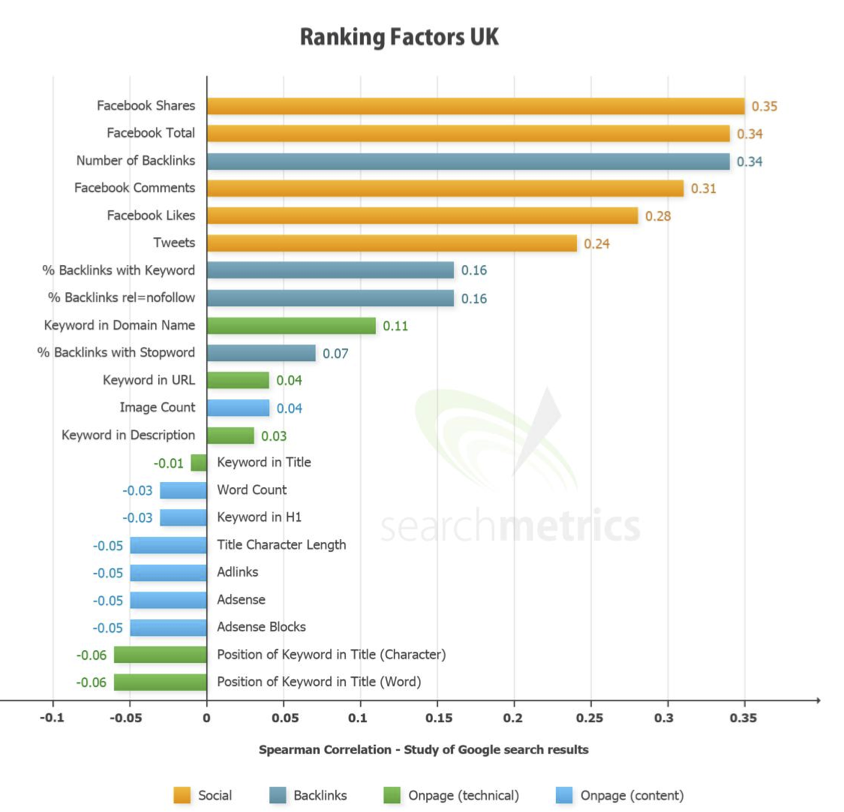
Google continuously updates its algorithm, so instead of trying to manipulate it, focus on building quality content that benefits both users and ultimately Google.
The same goes for link building – create good links.
Over the last 10 years, many have predicted that link building would become obsolete as part of an SEO strategy. However, it seems that a serious link strategy still delivers results.
But what is a good link? We will take a closer look at that in the next section.
Links don’t directly affect Google Ads performance (Google Adwords).
However, a good website can improve both organic results and the positions you have in advertising. You receive a quality score in Google Adwords, and this is influenced by your content strategy and on-site optimization.
What does Google think about link building?
Google is not interested in companies creating “fake links.” However, in my opinion, Google isn’t overly concerned with this, as its algorithm updates generally catch attempts to manipulate the system.
When I first started with link building 6-7 years ago, SEO had many gray areas back then, often referred to as Black Hat tactics.
Examples of this included:
- Buying links from India (spam on forums and blogs)
- Purchasing links from various websites that sold links
- Creating links in all comment sections and forums
- Adding your website to link directories
At that time, Google’s algorithm wasn’t advanced enough to clean up these tactics. Additionally, few companies were doing online marketing at the time – but that has certainly changed since then.
What makes a good link?
A good link is created naturally or through PR efforts. For example, if your product is so great that people choose to write about it or if you actively pursue PR. An excellent link comes from a site that is relevant to your website or product.
Building good links is almost an art form, and it can be challenging to determine the right approach.
You might think it’s unrealistic that major news outlets would link to your product. So what can you do?
Is link building completely out of reach?
No, but it has become more difficult.
If PR is not an option, check out the following strategies for acquiring high-quality links.
Do links from Facebook and other large platforms matter?
“Nofollow” means that Google is instructed not to pass value to the link. This is done to prevent spam and avoid giving unnecessary advantages. However, nofollow links still hold some value, especially if users click on them.
You can check for nofollow attributes by right-clicking on a link and selecting “Inspect.”
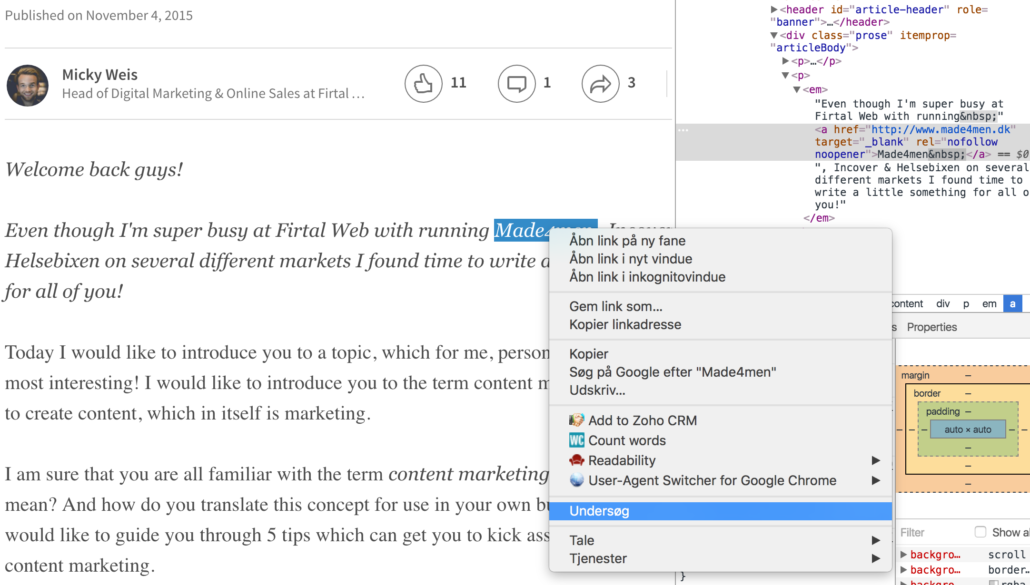
Then, you get this code and can see that the link is nofollow.

As mentioned, nofollow still has value, especially if users click on the link. Google’s algorithm is now sophisticated enough to detect whether you only have nofollow links or dofollow links.
A mix will be the most natural, so don’t forget about nofollow links.
What is a bad link?
Any attempt to manipulate links is a poor strategy. You are not smarter than Google, and neither is the agency you hire.
A bad link is one that is clearly created to manipulate Google’s search results and offers no real value to users. Similarly, spammy links that overwhelm users are also considered bad. An overly aggressive link strategy, such as generating 100 links in one day and none the next, appears suspicious to Google.
Should you buy links?
In general, be cautious when buying links. Purchased links are obvious to Google because these sites are often flooded with external links. If Google manually reviews such a site, it becomes evident that the links are paid for.
Some platforms offer paid link placements, like Bazoom, but they require either a strong network or a substantial budget.
Poor-quality links are often sold at high prices because many people lack knowledge about digital marketing.
Is link building necessary?
That’s always a great question.
As illustrated earlier, multiple elements influence your ranking on Google. Links still hold significant value and can be the deciding factor in whether your website ranks #1 or #5.
If you’re in a highly competitive industry—such as baby clothing or fashion – you’ll find it difficult to rank on page one for competitive keywords. Here, links can be the final push that boosts your rankings.
Remember, link building is just one aspect of a comprehensive SEO strategy.Success depends on a well-optimized website, strong content, and valuable offerings to users.
Often, links come naturally if you provide something outstanding—whether it’s a product or content.
Local SEO also involves link building, especially for businesses like restaurant chains or local real estate agencies looking to increase visibility in their region.
5 Tips & tricks for getting more backlinks
-
Broken link building
This strategy is one of my favorites! Not only does it help you get valuable links, but it also benefits other website owners.
The method involves finding articles where a service or product similar to yours is mentioned, but the link is broken. Contact the site owner with a helpful email suggesting your content as a replacement.
-
Product/service recommendations
Do you use an online tool in your daily work? There are thousands of tools out there.
You can reach out to the creators and offer a testimonial for their website. Many companies gladly feature user testimonials, often including a link back to your site.
-
Find mentions of your brand
Businesses are frequently mentioned in blogs, media, and other sites.
Here are some helpful tools:
- Google Alerts – Set an alert for when your business is mentioned.
- Mention.com – Get weekly alerts about brand mentions.
If you don’t want to spend time on a tool, you can also Google it by searching your brand name.
- If you find places where you are mentioned, but there is no longer a link – send a friendly email.
- If it’s a larger website, there may be a collaboration in the works (see opportunities).
- Negative recommendation? Give the customer a great experience and get a better review and possibly a link
-
Guest blogging
Are you an authority in your industry? Guest blogging is a valuable strategy for both link building and content marketing.
Major media outlets love content. If you consistently provide high-quality insights, there’s a good chance they’ll publish your articles and link back to you.
-
Content marketing for link building
Content marketing is a great way to earn links. Companies like Sinful.dk have created data-driven content that was featured in top news sites.
Tips for effective content marketing:
- Use tools like Buzzsumo to analyze what content is getting links.
- Create something even better with new insights and additional sources.
- Contact journalists who have previously covered the topic and share your improved version.
Bonus tip: Create a tool – Rankscanner
My good friend Rune Jensen created a fantastic tool called Rankscanner.
However, as of November 2017, it no longer exists because Rune decided to pursue a career in gaming and now works with Snoost.com, a cloud gaming project.
Rankscanner simply tracks your keywords on Google and shows you how you rank compared to competitors and whether your SEO efforts are making a difference.
The tool has a free version, and it’s unusual in the industry, as similar tools are usually far more expensive.
Because of this, Rune has received a lot of “free” links from various international media outlets that link to his blog and mention his tools when giving SEO advice.
The research part
Keep an eye on your domain’s value
Of course, there are differences in the value of links.
If you get a link from TechCrunch’s homepage, it holds more value—regardless of what your site is about—than if you get a link from your local sports club.
How do I determine a domain’s value?
Install a browser extension—I use Chrome—called MozBar.
Google “MozBar,” and you’ll find the page you need.
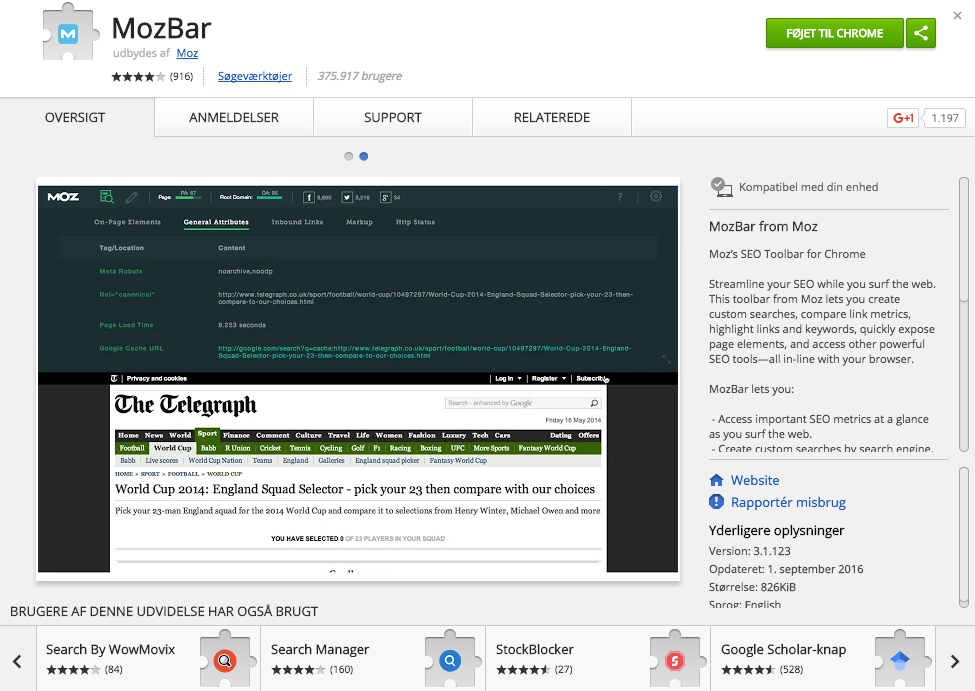
After this, you’ll get a small “M” icon in your browser to look for.

You can see the small “M” icon in my Chrome bar, and if you click on it, the MozBar will drop down.
Next, look at DA, where you can see that TV2.dk has a DA of 70, while my domain has 23.
When you visit a page, you’ll see a value displayed—this value is referred to as Domain Authority (DA).
It’s not an official metric from Google, but Moz has been in the industry for many years, so I consider their assessment to be reliable.
Keep domain authority in mind when building links
Always consider a site’s value when doing link building.
Remember, a website that specifically covers your industry holds more value because it is content-related.
It takes time to increase your DA, but it happens faster if you acquire strong backlinks.
What backlinks do you have?
Just as it’s important to track where you’re mentioned, it’s also crucial to monitor old links.
Always stay on top of them and keep them updated.
I use a few different tools for this.
Try using Megaindex—enter your URL and check your links!
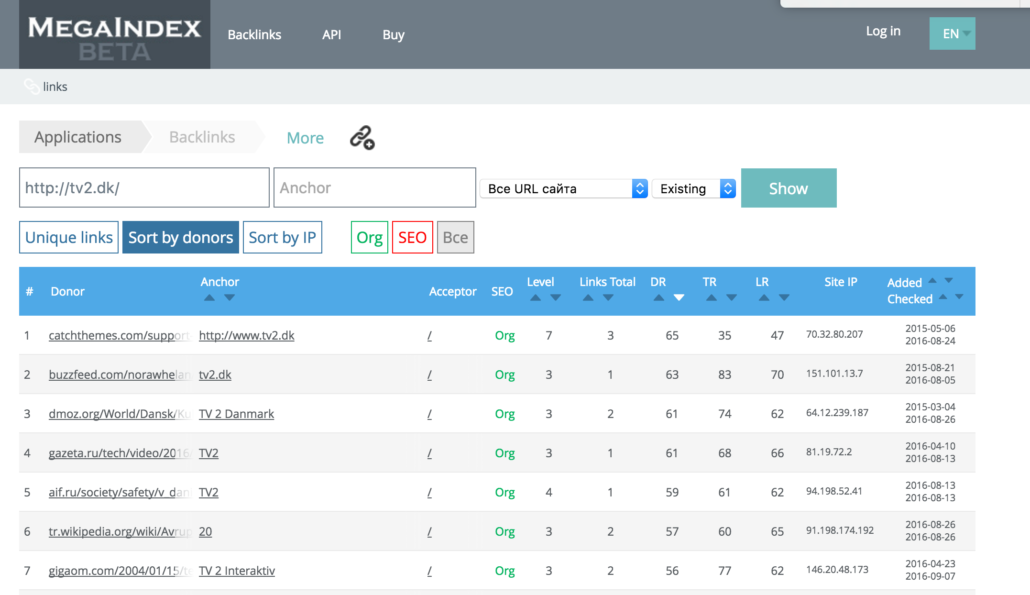
As you can see, I’ve added TV2’s website and can now view their links.
Megaindex defines this based on its own algorithm and assigns each link a score.
I often do this for competitor websites, export the links into an Excel file, and manually review them to analyze their link-building strategies.
Be cautious when replicating competitors’ backlinks
It’s not always a good idea to copy other people’s backlinks unless you fully understand what you’re doing.
- They might not know what they’re doing themselves.
- The links could be very old and no longer relevant.
- They might have purchased links, which can negatively impact their domain authority.
Other tools for checking links
There are many tools for checking backlinks. Below are some of the most well-known ones, but they do come with a monthly cost:
Megaindex, which I used in the example above, is still free, so you can use it without any cost.
Which keywords are important?
When doing link building or SEO in general, you typically start with a keyword analysis.
This topic deserves an entire blog post on its own, but in simple terms:
By using tools and data insights (such as landing pages), you can identify and optimize for the most valuable keywords.
Example: Searchmetrics
With Searchmetrics, you can see how many searches specific keywords get in different industries.
You can also check which keywords your competitors rank highly for.
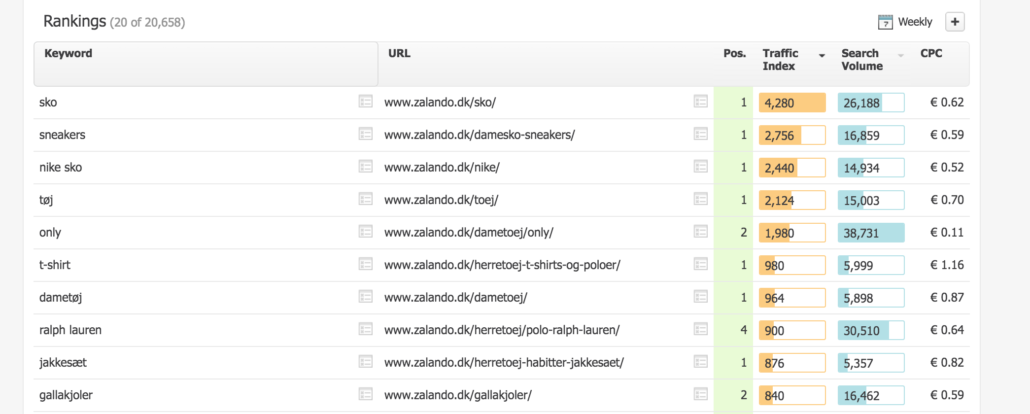
Now, Zalando is a very large example. They have a strong domain and rank very high for many keywords. The smart thing about Searchmetrics is that I can see the search volume per month in Denmark. This gives me an idea of what a high ranking is worth.
Keyword tracking
Are you getting results from your link-building efforts?
I personally use Rankscanner for all my domains.
With Rankscanner, you can add a domain and the keywords you want the site to rank for—or at least want to track the rankings for.
Screenshot from Rankscanner
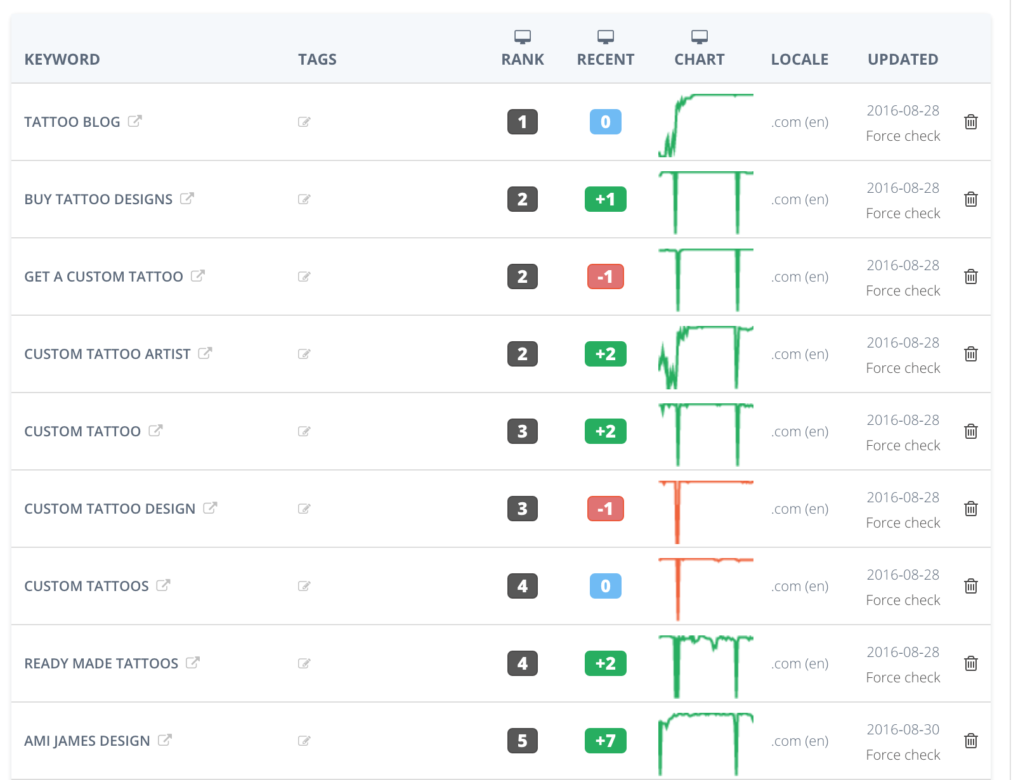
As you can see, I can track how my keywords are performing for a given website. I can also monitor the statistics over time, which allows me to react to any fluctuations rather than being caught off guard negatively.
Keep an eye on your landing pages
Another important metric—especially if you run an e-commerce site—is to compare your landing pages.
You can select organic traffic in Google Analytics, and then choose Landing Pages.
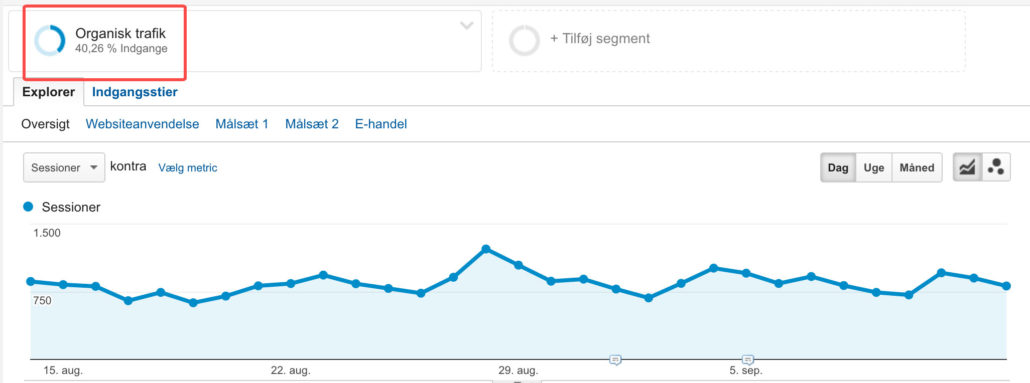
You can then analyze your landing pages.
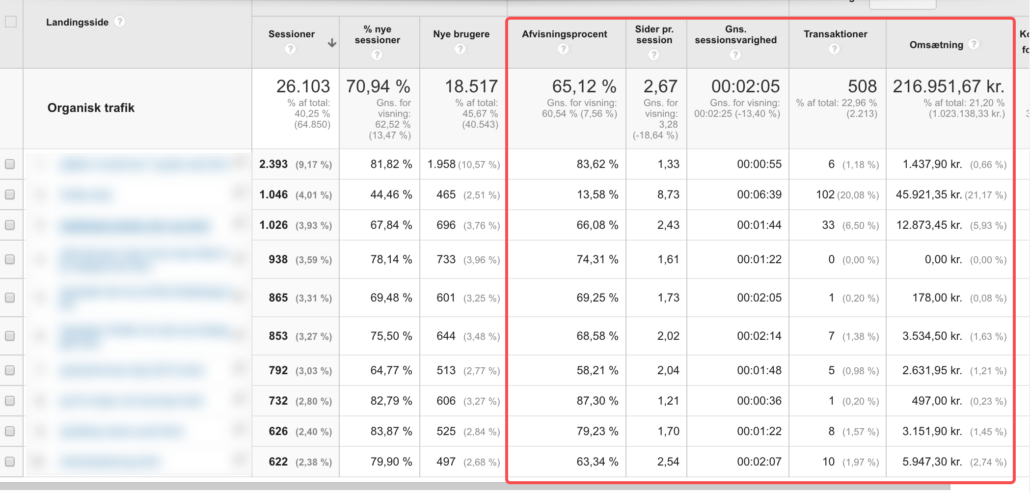
What should you look for?
- Revenue: If you find that a page ranking number 3 generates 10,000 in revenue, there’s a good chance that the page could generate 20,000 if it ranked number 1. If you’re not selling anything and you’re in the top 3, it could be that you’re too expensive, you don’t have the right products, or your website isn’t optimized for the user. Be critical of your own data.
- Bounce Rate: What percentage of your users leave the page immediately? Is it higher compared to other pages? Check if the page is optimized for mobile, if it’s slow, or if the introduction makes sense.
- Time on Page: How long do your customers spend on that page? Is it realistic that they can even finish reading your blog post in that time? Make sure the page functions optimally across all devices and at any speed.
Conclusion
Link building is still important.
As mentioned in one of my other posts, Google still accounts for over 50% of revenue for most e-commerce websites. Most of us still Google products when we want to buy or find information. Therefore, link building remains crucial, no matter what industry you’re in.
Can link building only be used for e-commerce?
No, it applies to all industries. This is something many people still misunderstand!
- Accountant in Aarhus? Imagine ranking #1 for “accountant Aarhus.”
- Blogger? Imagine ranking #1 in search results for all your blog posts.
- Lawyer? Imagine ranking #1 for all your services.
My advice: Be careful not to focus too much on link building. Instead, spend your time creating a great product and content around it.
FAQ: Linkbuilding
How do I find hidden link opportunities in my industry?
Hidden link opportunities are places where your topic is already being discussed, but no one has linked to your content yet.
This could be niche forums, industry blogs, podcasts, communities, or local portals.
A good method is to analyze your competitors’ backlinks to see where they are getting mentions.
You can also search for your topic on Google, LinkedIn, or Reddit to find places where people ask questions or share experiences. By offering knowledge, data, or useful resources, you can often get mentioned and linked naturally.
How can AI be used for link building?
AI can be a powerful tool for link building research.
AI tools can analyze large datasets to identify websites, blogs, or journalists writing about topics relevant to your niche.
They can help prioritize potential link opportunities based on traffic, authority, and relevance.
AI can also examine competitor link profiles and reveal patterns in their strategies. However, it’s essential to combine AI with human judgment, as quality, context, and credibility still require human evaluation.
What types of content naturally attract the most backlinks?
Content that provides value or offers new insights tends to attract the most backlinks.
This includes in-depth guides, original research, data analyses, infographics, or interactive tools.
Media outlets and bloggers often seek sources to support their own articles, so content with statistics or clear explanations of complex topics is frequently linked.
Visual elements and practical tools are also shared more. The more unique and useful your content is, the more likely others are to reference it.
What makes content “link-worthy”?
Link-worthy content is content that other websites have a genuine reason to reference.
This could be because it provides new data, explains a complex topic clearly, or offers a helpful resource.
Many backlinks happen naturally when your content helps others support their own articles or arguments.
Original studies, statistics, tools, and comprehensive guides are common examples of content types that often attract links.
How can content marketing support link building?
Content marketing and link building go hand in hand.
By creating content that helps, informs, or entertains your audience, you increase the chances that other websites will link to it.
Guides, analyses, studies, and tools often serve as resources that bloggers and journalists reference.
Link building can become a natural effect of quality content – rather than forcing links, the goal is to produce content that deserves to be shared and cited.
Can existing clients or partners provide backlinks?
Yes, many businesses overlook their existing network as a source of links.
Suppliers, clients, and partners can mention your company in case studies, testimonials, or collaborative articles.
For instance, a client could describe a project where your solution played a role, or a supplier could link to you as a partner.
These links are usually valuable because they are natural and relevant, and they also boost credibility by showing real-world collaborations.
How do you get links from major media or industry experts?
Links from authoritative media or experts often require a more strategic approach than standard outreach.
Journalists and industry professionals typically link to sources that provide new knowledge, data, or expert perspectives.
Publishing analyses, research, or commentary on current industry topics can be effective.
You can also offer interviews, guest posts, or collaborative guides. Establishing visibility as an expert on LinkedIn or industry blogs makes it easier for journalists to find and cite you.
How do journalists and media find sources for their articles?
Journalists often find sources through industry blogs, LinkedIn, previously cited experts, press releases, or research reports.
Publishing content with new data, analyses, or expert insights increases your chances of being used as a source.
Many journalists also actively search Google for experts when working on a story.
Strong content on your website makes it easier for media to discover you, which can lead to both mentions and backlinks.
How do you maintain a natural link profile over time?
A natural link profile grows gradually and includes links from various types of websites, such as blogs, news sites, niche forums, and industry portals.
Varying anchor text is also important, so not all links use the same keywords.
A healthy link profile typically includes branded anchors, generic phrases, and descriptive links.
When links come from relevant sources and accumulate over time, they appear more natural and credible to search engines.
How can you measure if link building is working?
The effect of link building can be measured in several ways.
Track your search rankings for targeted keywords over time. Analyze changes in organic traffic and visibility. Check if links are sending direct traffic to your website and whether this traffic generates leads or sales.
Combining data from SEO tools, Google Analytics, and CRM systems gives a clearer picture of the real impact of your link building efforts.
How long does it take for link building to show results?
Link building is usually a long-term process, and results rarely happen overnight.
Some links may affect rankings within a few weeks, while others take months to show impact.
Timing depends on keyword competition, link quality, and your website’s current strength.
Generally, steadily building links over time produces more stable and long-lasting results than short campaigns with many links at once.
Can negative SEO attacks harm my link profile?
Negative SEO attacks are rare but possible.
They can involve spammy links from low-quality websites intended to make your link profile look unnatural.
Most search engines have become better at ignoring such links, but monitoring your backlink profile is still important.
SEO tools can help track new links and identify suspicious patterns. If you notice spam links, you can use Google’s disavow tool to signal that they shouldn’t affect your site.
How do you choose the right link building agency?
When selecting a link building agency, focus on experience, transparency, and proven results.
Reputable agencies typically work with strategic outreach, digital PR, and content-driven links rather than mass-produced backlinks. Ask for case studies or examples of past results.
A strong agency explains its methodology and prioritizes relevant links from credible websites, as quality usually delivers better and more stable SEO results than quantity.




Comments