




I receive a lot of emails from young entrepreneurs eager to get started – I’m almost turning 30 soon, so I’ve decided to pass the baton to a young and inspiring guy named Daniel Johannesen.
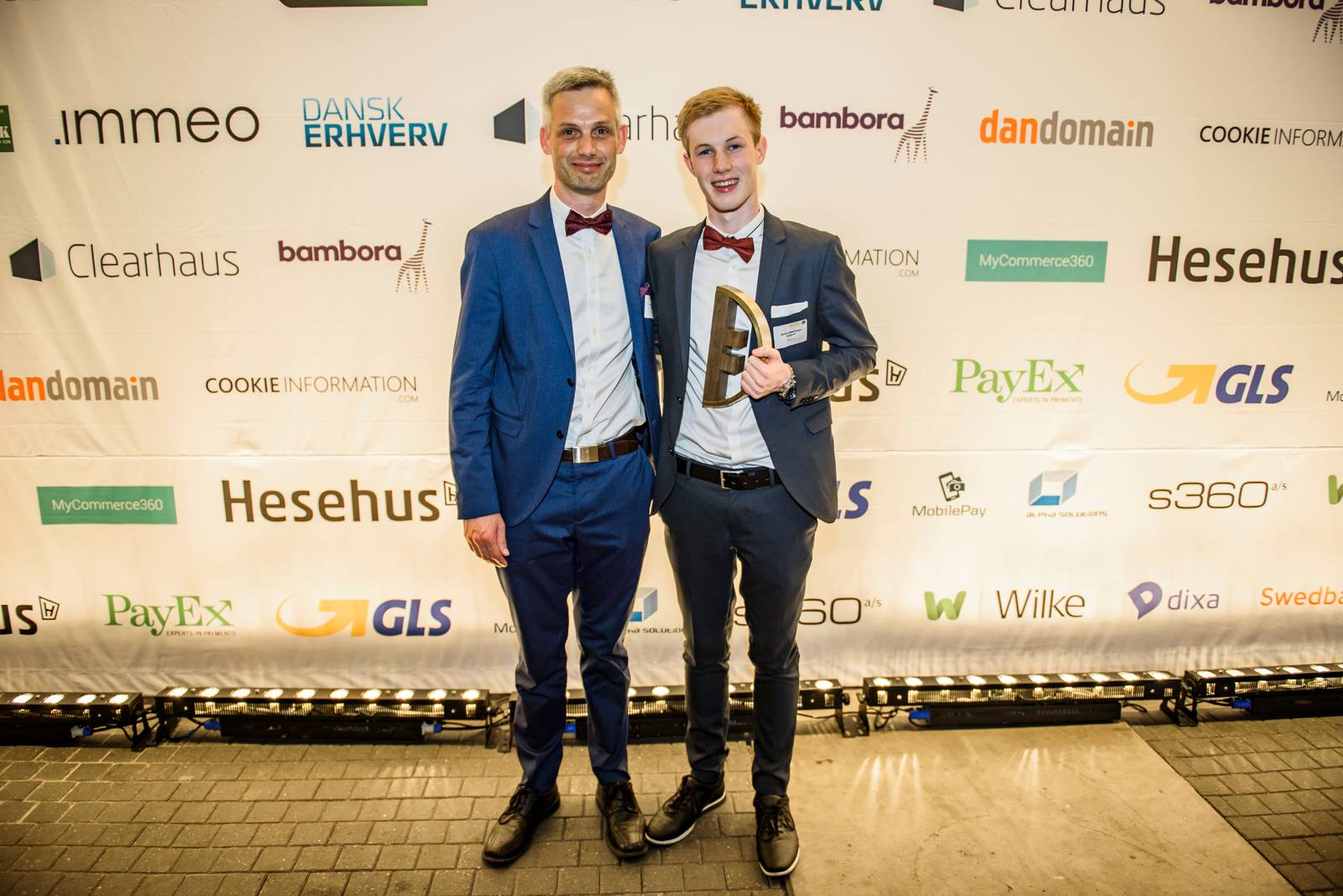
Daniel is 19 years old and today runs Watery, which generates several million Danish kroner in revenue. This year, Daniel won an e-commerce award. How does a 19-year-old like Daniel handle such massive success, and how do you even get the idea to create such a business while still in high school?
There’s no doubt I’m proud to work with Daniel and really enjoy following his development!
I see a lot of myself in him, and I love being able to mentor him and help both him and Watery on their way.
Listen to Daniel, and feel free to leave a comment if you have questions!
Welcome to Daniel. 19 years old – how did you come up with starting a webshop?
Mostly, I started running a webshop because I just couldn’t help it.
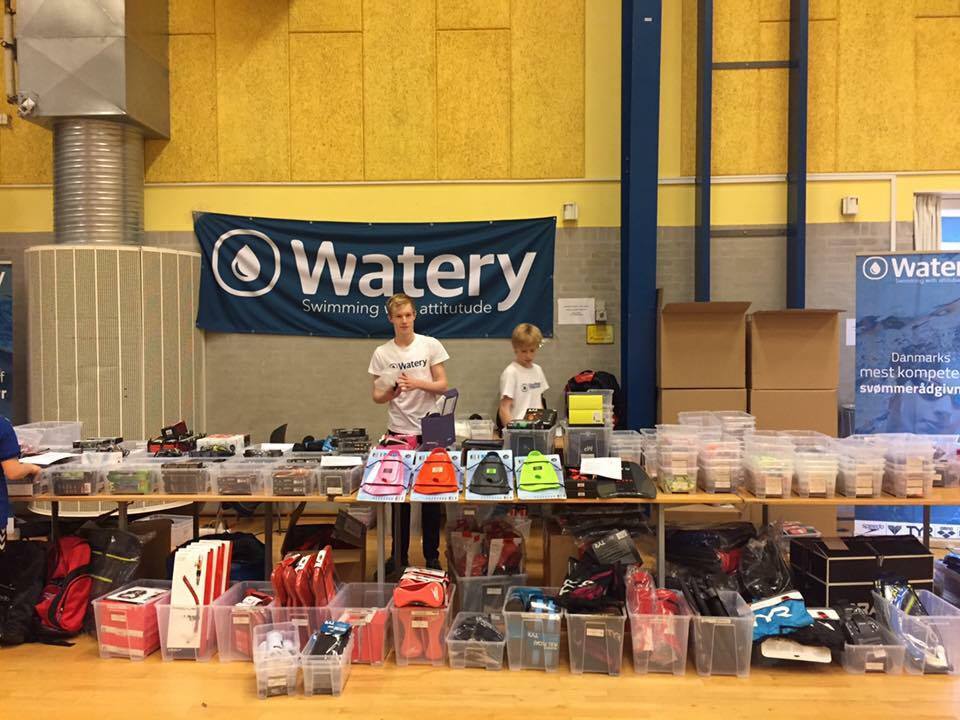
When I was around 15, swimming competitively up to 7-8 times a week, one of my teammates asked if I wanted to help import some products from the USA that had been popular on Kickstarter, start a small business, and sell them via a webshop and in big retail stores like Bilka and Wupti (yes, the ambitions were already big back then). It sounded interesting for a young kid like me, even though neither my mom nor dad had any experience with entrepreneurship. We got started quickly but soon realized it wasn’t as easy as it first sounded.
We lost a shipment over the Atlantic, webshop orders were lower than expected, and Bilka wasn’t as excited about the product as we were. So over 1.5 years, we gradually lost the spark and eventually sold the business for peanuts, but a completely different spark had been ignited in me.
I loved seeing something go from absolute nothing to something. Ordering products, doing marketing, getting an order, and shipping it to the customer – there was something about that I really liked.
Then, when I was 17 in March 2016, I talked to my swim teammates about how we thought there was no cool online swimming shop where we could buy all our gear in one place at cheap prices, and that idea stuck with me.
Over a few months, I thought it over and started looking at products, making a small business plan, talking to suppliers, finding the best webshop system, etc. And that is how Watery.dk was born.
What challenges did you face in the startup phase?
There were quite a few – some bigger than others!
The first was definitely my young age; when I met with suppliers and partners, my age was clearly a challenge. There was always some skepticism, which was understandable, and you have to accept that if you want to start young.
However, I have learned to turn that skepticism into an advantage because if you just show a lot of passion and knowledge, the skepticism disappears quickly.
Then people just get impressed and want to help you even more. So I actually believe (or am certain) that my young age made it easier to get started because adults want to help young, ambitious talents.
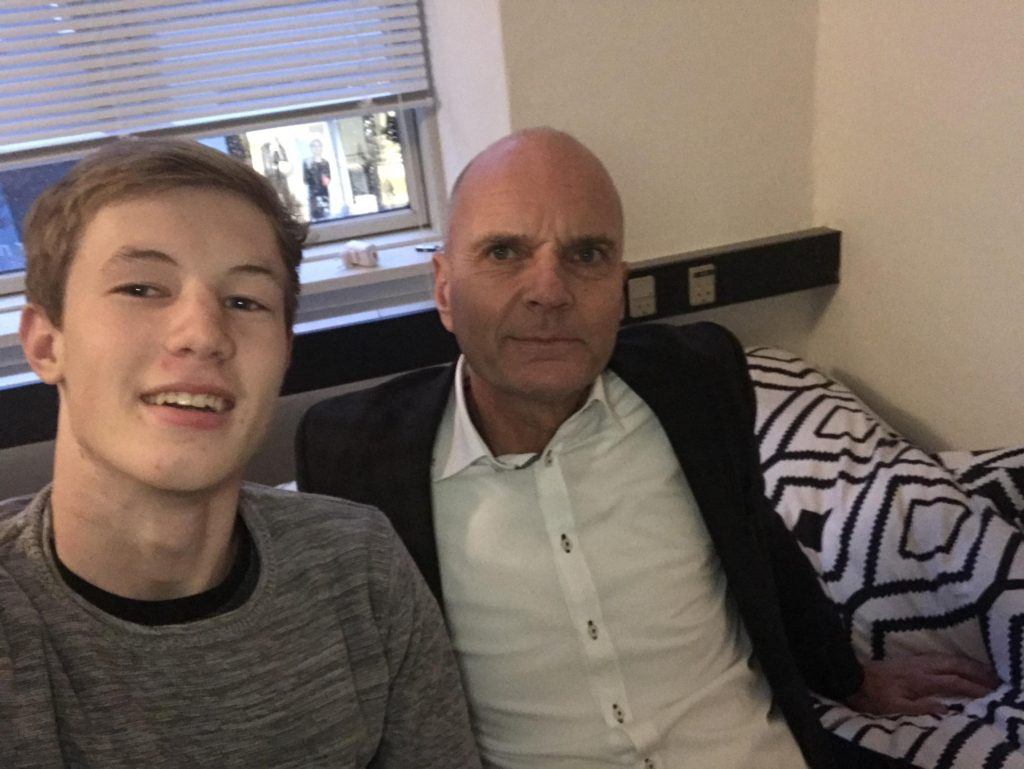
Daniel and I at one of our great workshops on Facebook, marketing, personal development & the future.

Another challenge was, of course, liquidity. As a 17-year-old, you naturally don’t have a lot of money saved up, or do you? I got some money for my confirmation like most kids but instead of spending it on a big TV or PlayStation, I saved it because I already had the idea to use it for one big thing.
That turned out right. Along with the confirmation money, I had some savings from working at Bilka, and I borrowed roughly the same amount from my dad, so I started with about 100,000 DKK. A lot for a 17-year-old but I think it takes some liquidity to get going properly. And I was committed ☺
But the biggest challenge was the well-known state bureaucracy. Under 18, you’re not allowed to run a business, which I fundamentally disagree with, so you have to apply for permission at statsforvaltningen anyway.
I applied but got rejected twice after four months of waiting. A huge setback. By then, I had already invested a lot in inventory and 25,000 DKK in the webshop. So there was no way around it. When I turned 18 in January 2017, wanting to catch Christmas sales, my dad registered a sole proprietorship, which we ran until recently when I took over in an ApS.
If you want advice on how to get through statsforvaltningen when under 18, here’s my recommended order:
- Go to statsforvaltningen.dk (link: https://www.statsforvaltningen.dk/site.aspx?p=8543) and read carefully what you need for the application. Write your application and have your parents include their tax returns. You can see my application here.
- Write a 5-6 page business plan to attach to the application. See how mine looked here.
Note: If you’re in school, do NOT mention these:
- Live chat 08-22
- Price match
- Pre-orders from suppliers (even if required)
- Don’t start with an ApS; start with a sole proprietorship instead
- Have your parents sign a release statement.
- Send the application, business plan, and release letter by mail to your nearest statsforvaltningen office. Find addresses here and also send by email to [email protected]
- Follow up regularly; processing can take 3-4 months. Call and email 1-2 times a month at 72567000 and the email above.
- Once approved, start your business and include the approval letter so they know you have permission.
- If rejected, appeal and respond to their reasons. If rejected again, either wait until 18 or have a parent register a sole proprietorship, which can be transferred to you later (requires an accountant and costs around 10,000 DKK, plus possible taxes on profit).
Me and Niels Ralund, chairman of FDIH – an organization I’m proud to be part of.
How many hours does it actually take? Do you get to bed on time?
Definitely more hours than you expect to begin with. Actually, a lot more.
I started Watery.dk just as I began 2nd year of business school in Horsens, while training elite swimming 7-8 times a week. So I was already pressed for time, like most high school students wanting to do everything.
The first 6 months I spent maybe 2-3 hours a day on it because I simply had no more hours in the day. But the pressure was still there. As Watery.dk grew in orders, there were more customer inquiries, more packages to send, more purchasing, accounting, marketing, etc. By summer 2017, I was so busy I trained less and less and had to skip the Danish championships because I hadn’t trained enough.
That’s probably the biggest sacrifice entrepreneurship and Watery.dk has demanded, but it was necessary.
After summer break, I stopped competitive swimming and suddenly had a lot more time to grow Watery.dk while finishing 3rd year. Awesome.
So during 3rd year, weekdays looked like school 8-1, then working on Watery for a few hours into the night, then up at 8 the next day. That’s how it really was.
While my friends played Fortnite, watched TV, and did homework, I prioritized my business (my teachers and mom were not happy with the homework deprioritization, but that was my reality).
On weekends, I usually put the business completely aside to be young, which I still think is very important. As Micky once reminded me: “You don’t need to peak career-wise at 19,” and that is so true no matter how fast your business is growing.
So in total, I’ve spent about 50 hours per week on Watery the last year. Not crazy compared to other growth entrepreneurs, but for me, it’s not about hours—it’s about the output from those hours.
I averaged about 6 hours of sleep per night through 3rd year, so I’m definitely missing sleep. But as I tell my sometimes worried mom: you can sleep when you’re old.
What do your parents think about you prioritizing the business?
That leads nicely into this question.
The reactions differ depending on whether you ask my mom or dad.
My dad thinks it’s cool and spends a lot of time managing accounting at Watery, discussing strategy with me, and constantly suggesting new products.
My mom is more worried about my lack of sleep and less focus on school.
Both agree I had too much school absence (ended up with “only” 15%) due to prioritizing Watery with events in Copenhagen, a week-long business trip to Brazil, etc. They want me to take a higher education after a couple of gap years with Watery full time – “just to have it” – but I’m not fully convinced.
But there’s a downside to prioritizing something so highly: you have to give up other things. Besides sleep, it’s time with family in the afternoons and evenings, which I used to spend with them and my brothers but now spend mostly at the office.
However, I always eat dinner at home, which is important to me. As Watery has grown, I sometimes sleep at the office and go straight to school because I finish work late at night.
Now that you have success, is it big champagne bottles on weekends and the Maldives this summer?
First and foremost, there should be no doubt that it is neither a walk in the park, easy as pie, nor does it bring lots of money and champagne bottles. It absolutely does not, and it’s important for me to emphasize this from the start.
Even though I hate old sayings: it really takes blood, sweat, and tears to reach a certain kind of success.
I’ve lost quite a bit of blood cutting myself on the hundreds of cardboard boxes I received with goods that had to be unpacked. I have sweated a lot here alone in the office on nice summer days like these, having to say no to going to the beach with friends.
I have cried at all hours of the night because I couldn’t handle that I had ordered a bit too many new products and now had bills 100,000 kroner higher than what I had in the bank.
That is the life you say yes to as an entrepreneur, and you have to be prepared for it. There is no pampering (well, sometimes there is), but you get it.
That said, I still think that being an entrepreneur and seeing your own business grow is one of the coolest things ever. And that’s why I love what I do and simply can’t stop.
Maybe I’ll buy an extra beer in town, and I will take a couple of weeks off this summer as well as a week at a festival, but isn’t that like everyone else?
But it’s important to point out that I haven’t withdrawn anything from the company yet, so I’m probably the poorest among my friends if you just look at the money in the bank. And that is important to remember.
By the way, I don’t consider myself – yet – as someone who has “made it.” Watery.dk could still disappear tomorrow if things suddenly go really bad.
If you had to give 3 good pieces of advice to young entrepreneurs who want to get started, what would they be?
If I had to stick to the three best pieces of advice, they would be:
1.Learn from the best (and be humble toward them)
One of the best things you can do when you are young without much experience but with lots of drive is to reach out to some of the best in the field you want to master and just ask them. Most love helping young people like us, so it’s just about soaking up as much knowledge as possible.
When I started Watery, I knew very little about Shopify (my webshop system – which I clearly recommend for all new webshops), Facebook advertising, Google Adwords, accounting, etc. But just talking to these experts, you quickly learn a lot of small tricks.
The condition is that from the start, you are really humble. You must understand that they are the experts and that you are “stealing” some of their time, so you should appreciate and take the advice with you. That way, you’ll get help next time as well.
2. Be patient and build something YOU are proud of
We’ve all heard about young “entrepreneurs” who bring in cheap fidget spinners, hoverboards, or covers and quickly make a lot of money in a short time but never build a viable company with proper customer service, accounting in order, and stable revenue. That is just not entrepreneurship in my world and not something I’d be proud of.
Instead, I think it’s much cooler to build something from scratch, invest some savings, and try things out slowly. First one customer, then the next, until you suddenly get an order every day. Then, in my opinion, you’ve already come far.
That’s what you should keep in mind when building your new business. Sustainable success doesn’t come overnight but requires, as I explained earlier, a lot of work. But then you can also say it’s YOUR business, something you can be proud of and show to others – instead of having to hide your business because its Trustpilot, for example, is full of unhappy customers.
3. Build your business on your current passion
I took my existing passion for swimming over more than 10 years and combined it with business, and I think that’s why I still find it incredibly fun to work with Watery.
I don’t feel the work in the office is work but more like a hobby I just can’t stop doing. At the same time, you already have unique knowledge about the products/services you can directly pass on to customers, and it really works, I can tell you.
You can have the same feeling if you take something you like today and try to build a business on it. Maybe you do gymnastics and can build a gymnastics webshop. Or you like reading books and can build a new way to read them on your iPhone.
Who knows – but think about your current position: What do you like to do, what do you know a lot about, what do you find fun, what can be done better, etc.? At some point, you will slowly find something cool, and then you are off and running.
The things you don’t know how to do, how do you get better at them?
From the start, I was 100% clear that I didn’t know much about running a webshop and everything related to it. So there were lots of things I couldn’t figure out.
That’s why from the start, my mindset has been that in areas where I’m not the best, I hire people who are good at it. Plain and simple.
For that reason, I initially spent 25,000 kroner on a web agency to design and develop my webshop. I had no idea – and still don’t – about coding, and I thought if my sales platform works smoothly, marketing and sales become much easier.
So when it comes to the webshop, I recommend everyone spend what it takes, not less.
I also hired an Adwords agency from the start to manage Watery.dk’s Adwords ads because I wasn’t the best at that either. Similarly, I started working with Micky, who helps with Facebook ads.
This way, I have built a team of the best of the best around me, from whom I learn a lot myself but who also add great value to the company. Today, I am a competent Facebook advertiser, quite sharp at Google Adwords, and getting really good at SEO after doing it myself since day one.
So by surrounding myself with the right people, I am constantly learning.
Additionally, I attend quite a few e-commerce conferences where I have built a large network that in various ways want to help me. That is very valuable.

How does the future look for Watery and what is the dream?
I have never hidden my ambitions with Watery. Even before I had a single customer back in October 2016, my ambition was that Watery.dk should become the biggest webshop for swimwear and swimming gear. We are well on our way.
This year, the goal is to hit 5 million kroner in revenue, and in the longer term, the dream is that Watery is Scandinavia’s biggest swimming webshop by 2023 at the latest.
I’m pretty sure it will happen – the question is how fast.
That said, Watery is not a success yet. I still sit alone here daily at the office fighting to grow the business. I still need to hire the first real employee or take the first salary myself.
When I take the first salary, I will feel in a way that Watery has come quite far.
And that is the dream — that I can live off Watery for many years to come.
Because as I tell people around me: As long as I think growing Watery is incredibly fun, it is 100% worth it. But when it becomes a duty rather than a passion, it’s time to stop and possibly sell out.
But I’m not there yet.









Comments