




It’s no secret that Amazon is making serious waves – and the e-commerce giant often dominates headlines in media around the world. When is Amazon launching in Denmark? How does marketing work on the massive platform?
Yes, Amazon continues to expand its presence globally, but why not use that to your advantage and get ahead instead of fearing what’s to come?
Over the past six months, I’ve immersed myself in the Amazon ecosystem with the purpose of getting to know the platform better.
Through that process, I’ve learned about the advantages and challenges of selling on Amazon.
I’m now sharing that knowledge with you, completely free, and you’ll also get a number of tips on how to use their advertising platform, Amazon AMS (Amazon Marketing Services), easily and effectively.
This article focuses on the European market, but the overall setup is largely the same for Amazon US and Amazon Japan.
Let’s get started!
Products – get started selling on Amazon
If you want to sell your own products on Amazon, there are a few key decisions to make.
First of all, is Amazon actually the right marketplace for your product?
We’ll get back to that.
A prerequisite for getting started is being registered as a seller.
Essentially, there are two main options available, at least for ordinary sellers. There may be other paths for major brands, but in this guide, we’ll focus on these two:
- Seller Central
- Vendor Central
Seller Central
When registering with Seller Central, you can either create a new product listing or add yourself to an existing one (meaning you become a seller of that product).
You handle your own product sales and are responsible for shipping to the customer, at least by default. Amazon passes orders to you, and you take care of fulfillment.
You also manage customer service, returns, and order processing.
Seller Central is one of the easiest ways to start selling on Amazon, as all you really need is a product to sell.
A significant advantage is that you only need one account to sell across the European market. You simply translate your listings within the system.
Vendor Central
Vendor Central is invite-only, meaning you need to be invited to join. However, you can apply for access.
Vendor Central comes with many benefits.
You gain access to Amazon’s ad system (AMS services), which we’ll cover later.
You also get tools like VINE, A+ Content pages, and more.
The major benefit is that you send your products directly to Amazon, and they handle the rest. This only works if Amazon approves your pricing structure. They can decline to sell your products if the price isn’t profitable.
With Vendor Central, you receive weekly or regular orders from Amazon’s warehouses and send your products directly to them, who then ship to the customer.
Focus on high-quality product listings
- Good images: Upload multiple high-resolution images. If accessories are included, show them.
- Compelling descriptions: Explain what your product does – why should people buy it? Research similar products on Amazon and look at their Q&A and reviews. Can you answer those questions in advance? What negative feedback do similar products get?
- Call-to-action bullets: Use short, benefit-driven bullet points. What does your product do? Maybe it’s eco-friendly?
A well-optimized product listing has a big impact on your Amazon ranking. Higher visibility means more sales and more sales improve your ranking.
Amazon SEO & rankings
Ranking highly on Amazon is just as important as it is on Google. More visibility equals more potential customers.
Amazon’s A9 algorithm considers conversion rates, customer relevance, and satisfaction. Unlike Google, Amazon’s algorithm gives sellers a real chance to affect rankings through strong listings.
How Amazon evaluates your listing
Just like SEO optimization, Amazon uses a lot of factors in their algorithm – not all of which are easy to figure out – and there is also a lot that is not even published – just like Google.
However, there are several factors you can influence directly. I’ll cover the most important ones below, and you’ll find additional resources later in the article if you’d like to explore them in more depth.
Keywords – Amazon SEO
Amazon does not want keyword stuffing or spam. Unlike Google, Amazon does not require you to use your product name in five different variations.
The platform focuses less on exact keyword matches and more on whether your product actually sells. Their goal is to sell products not just show search results.
This is a core difference from Google: Google’s primary goal is to provide relevant search results and monetize traffic through advertising, whereas Amazon’s primary objective is to maximize product sales.
Price
If your product is more expensive than competitors, Amazon assumes your conversion rate will be lower so your listing is likely to rank lower, assuming it’s the same product.
Time on page
If you haven’t fully filled out your product details, images, descriptions, features, users are more likely to leave your page.
Time on page is a major ranking factor, so make sure your listing is informative and engaging.
Amazon A+ Content Pages
With a Vendor profile, you can expand your product listings using A+ pages enhanced content with rich visuals and detailed information.
These pages appear below the standard product description.
Here is Gillette’s A-page for one of their trimmers
It is located below the normal product text on Amazon
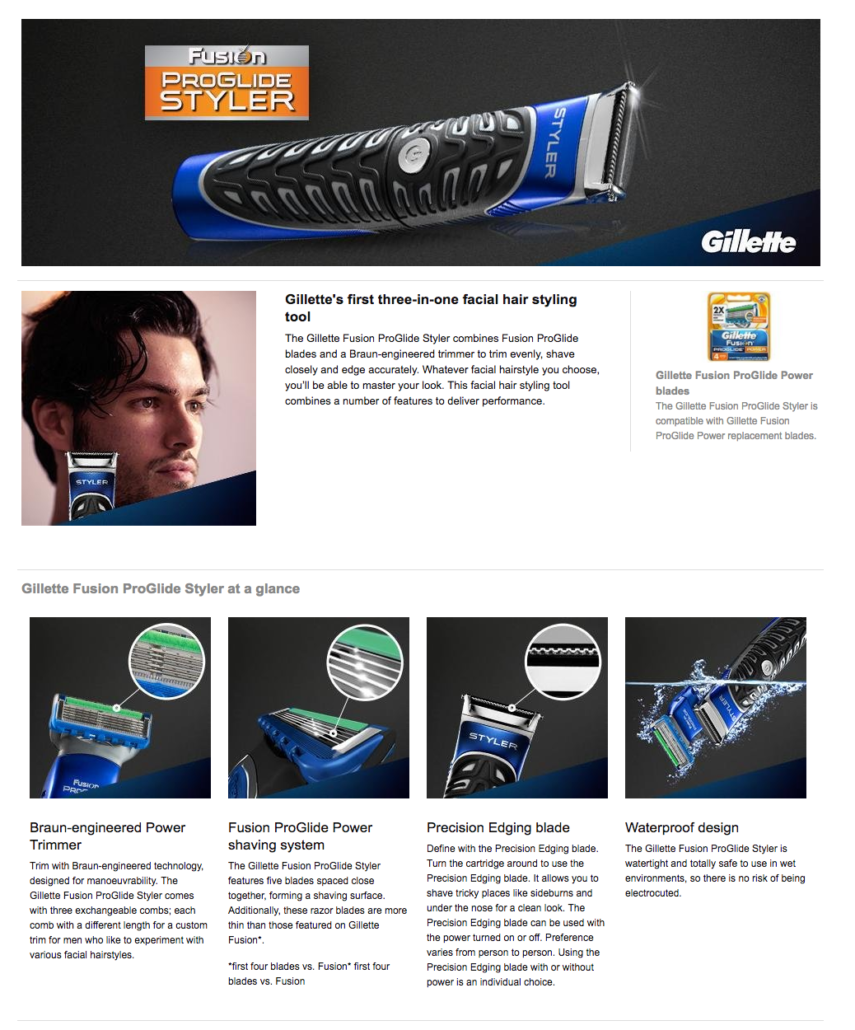
Costs vary depending on the model. Starting prices are around £400 if you design it yourself, or about £1,500 if Amazon builds it for you.
Amazon AMS – Advertising on Amazon
Amazon AMS is Amazon’s answer to Google Ads.
You can market your products through their internal ad platform.
While more basic than Google Ads, it’s still quite effective.
Buy Box – A must-have to advertise
To be able to advertise through Amazon’s advertising platform, your product listing must have the elusive Buy Box. It is estimated that between 82%–92% of all Amazon sales happen directly through a product listing’s Buy Box. That makes it a crucial factor for both Amazon PPC ads and organic sales.
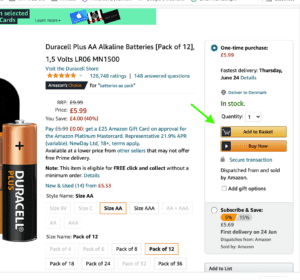
Even if you are the only seller of a product, it’s not guaranteed that you’ll be awarded the Buy Box. It depends on how you sell on Amazon (FBM vs FBA), your seller metrics, and your customer satisfaction levels.
Amazon only provides hints about what it takes to win the Buy Box. The algorithm is confidential, so we can only speculate about the influencing factors.
If you are an FBM seller, Amazon has indicated that your seller account must be at least 90 days old with flawless metrics (sales, return rate, customer satisfaction, etc.). As a general rule, FBA sellers have a significantly easier time gaining the Buy Box.
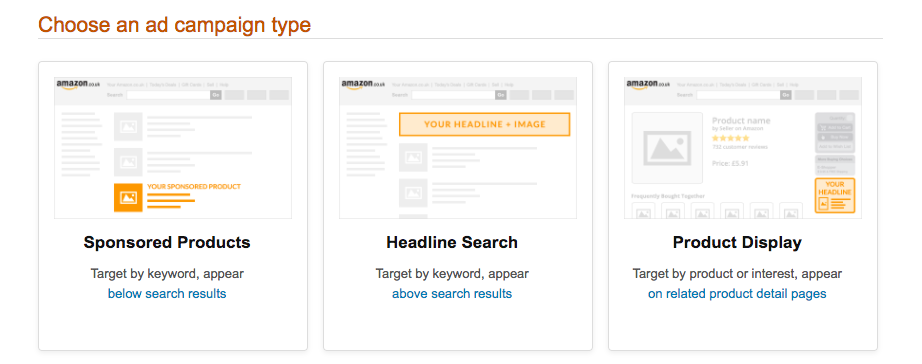
Choose placements and targeting options
Let’s take a quick look at how to create an ad in Amazon AMS.
Step 1: Choose placement and ad type
You can choose between various placement options when promoting your product.
In general, it’s about testing which placement works best for you.
Step 2: Choose which product to promote
After selecting the placement, choose the product you want to promote – you don’t need to have created the product listing yourself. You can promote any product on Amazon that you deliver through your Vendor profile.
Step 3: Choose keywords and audiences
Here, you can select from keywords, interests, and other products.
Let’s look more closely at these targeting options.
Keywords
If you choose to market your product based on what people are searching for, you can use Amazon Search Suggest. This means beginning a search on Amazon and noting which terms their algorithm suggests, then you can target your ads based on these keywords.
Amazon Search Suggest
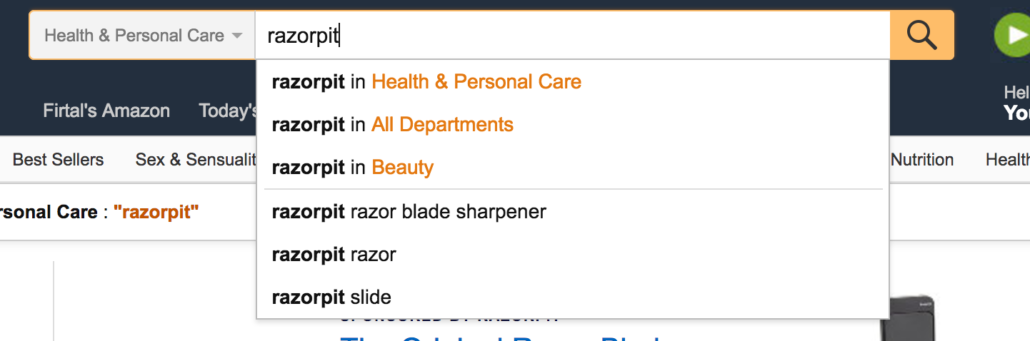
You can also use Google’s Keyword Planner. This tool gives you insight into what people search for on Google – it may very well reflect Amazon searches too.
As always with big data and web analytics: test, test, and test.
Interests
Another targeting option is by interests.
This means promoting your product to specific categories on Amazon.
An example might be selecting users browsing in the “men’s skincare” category, then targeting your product to that category or its subcategories if it fits well.
This is a broader audience than exact-match keywords but worth testing if you believe your product can outperform competitors often based on price, design, and of course, reviews.
Other products
The final option is to advertise when potential buyers are looking at products similar to yours.
For example, if you sell shaving foam, you might choose to advertise on listings for Gillette’s shaving foam but keep in mind that people often have brand preferences, so these campaigns can be more expensive.
Again, it’s worth testing, especially if you own the brand, as that gives you the margin flexibility to experiment. If the strategy works, it’s a strong win.
Tracking
As you’ve probably realized by now, it’s all about testing what works.
You’ll need to set aside a budget for extensive testing.
However, there are still far fewer advertisers on Amazon than on Google, so advertising costs are comparatively lower.
Here’s an example from one of my Amazon Advertising accounts showing spend, total sales, and ACOS (advertising cost of sale).
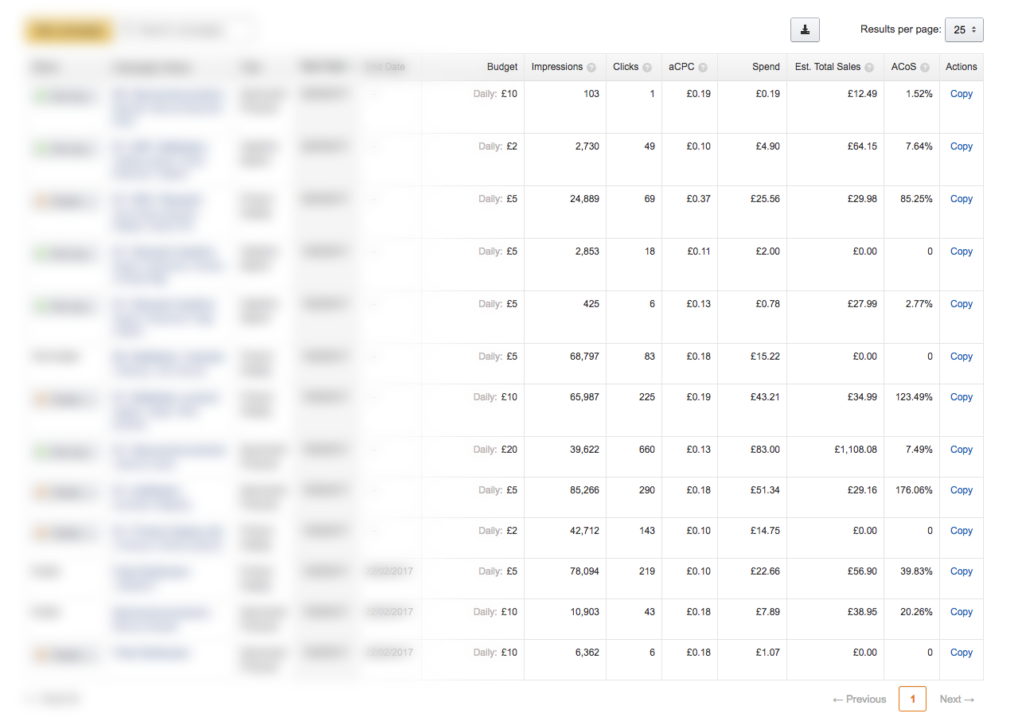
As you can see, not all campaigns are profitable – check the ACOS% column.
Those that are have a healthy ROI. As long as I keep my ACOS around 10%, i.e., 10% of revenue, it makes sense for those particular products.
Note that Amazon’s advertising system calculates in pounds.
Of course, this varies from product to product, again: not all products make sense to advertise, but I firmly believe it’s worth testing.
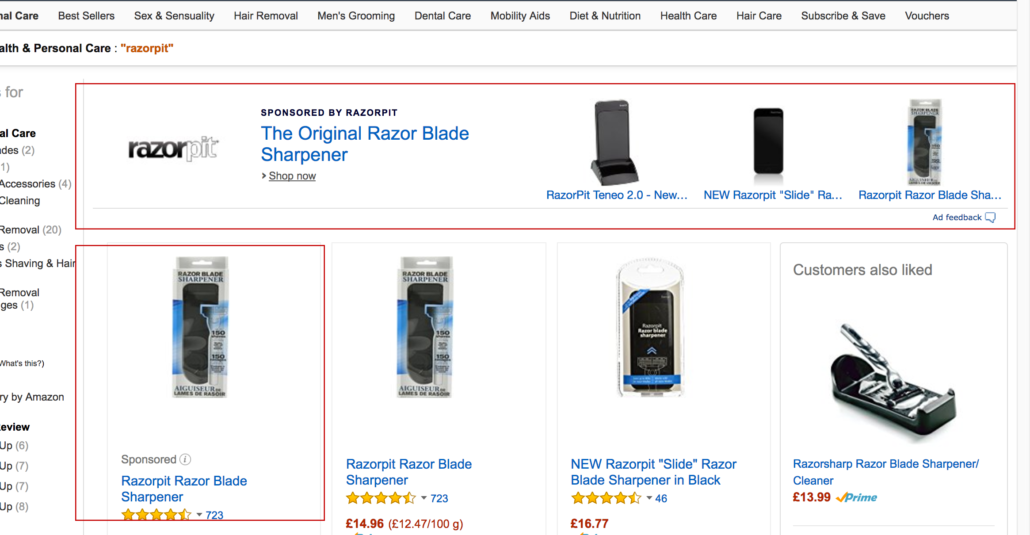
Here’s what my ad looks like for Razorpit
The areas marked in red are my ads; as you can see, we’re dominating that search.
Reviews are crucial
Reviews mean everything on Amazon and therefore for your product. The only real way to differentiate your product in Amazon search is through reviews.
Take a look at the reviews for the product baKblade – pretty convincing, right?
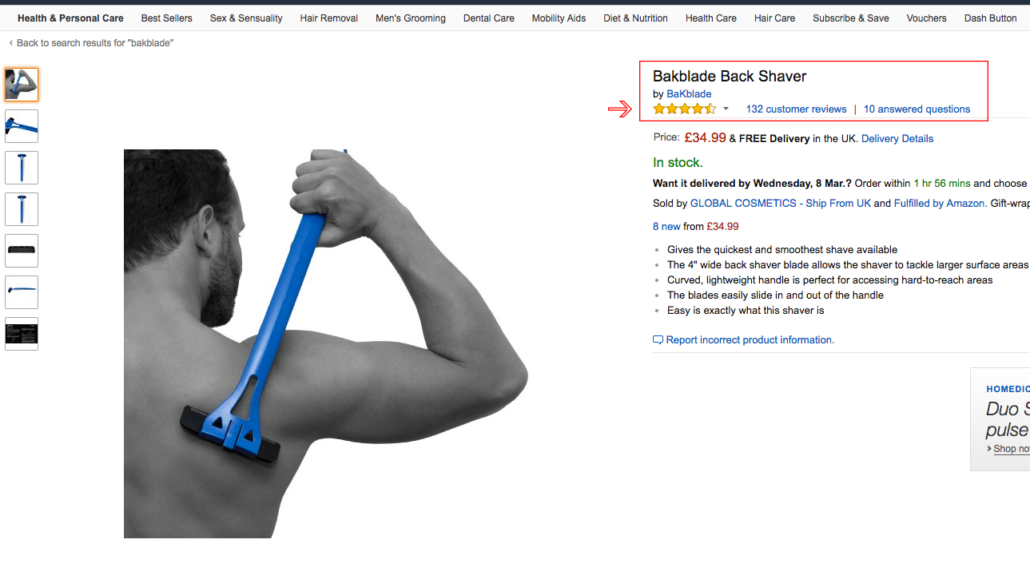
If users search for a product category like “skincare for men”, they’ll likely choose the product with 5 stars and many reviews.
Several studies have shown that products with more than 500 positive reviews (average 5 stars) tend to experience more stable sales.
You can encourage customers to leave reviews through social media, for example, it can help, depending on the product. What’s great about Amazon is that you generally can’t fake it if your product is poor, the platform will expose it.
New and stricter review policies
In 2018, Amazon made significant changes that made it harder for sellers to obtain reviews, especially illegitimate ones. Some sellers had taken advantage of methods such as:
- Offering 50%–80% discount codes to buyers who could then purchase the product below cost in exchange for a review.
- Refunding buyers (often with a bonus) outside of Amazon after a review was posted, making it appear as a regular sale in Amazon’s eyes.
Amazon has cracked down hard on such practices. In addition, reviews posted after discounted purchases (e.g., 70% off) now often get removed within 24 hours.
Amazon Vine
While we’re on the topic of reviews, it’s essential to mention Amazon Vine.
Amazon Vine allows you to send products for free to a group of approved reviewers who will give an objective review.
According to our login, this program costs €5,000 – we are currently setting up a test.
This tool is only available if you have a Vendor profile.
Should I be on Amazon?
Advantages
The major advantage is that you can start selling in many markets very quickly. If you have a strong product (see more below), you can generate sales from day one – globally.
You also avoid the hassle of managing a webshop – Amazon handles it all for you, allowing you to focus solely on branding your product.
Disadvantages
You quickly enter a price war. Since your product will be listed alongside hundreds of similar ones, prices can plummet fast. If you want to sell, make sure your pricing strategy allows for this.
You can face setbacks if your product isn’t fully developed. As mentioned, reviews matter a lot on Amazon, if users are disappointed during the product testing phase, you may get 1–2 star reviews, which are difficult to recover from.
You give copycats a chance to duplicate your product. Many sellers from China are active on Amazon – if your product becomes popular and is easy to replicate, someone may launch a knockoff. Amazon might also develop its own private label version and undercut your price.
Is my product right for Amazon?
There’s a big difference in what types of products fit Amazon.
Brand-driven
If you run your own brand, like a skincare brand (e.g., Dennis Knudsen), you control the product and pricing across all channels.
This works well with Amazon, allowing you to build demand through branding on social media, Google, and Amazon. And there’s only one place to buy the produc through you on Amazon.
You also skip the retail chain entirely – again, your brand is exposed to the whole world.
Volume-based
If you run a high-volume business, like a traditional webshop selling thousands of products, Amazon can be a solution. However, it requires much more micromanagement to evaluate whether your margin can support it.
It can also be challenging to create high-quality A+ pages and manage advertising across thousands of products, especially since Amazon’s ad system is not yet as sophisticated as tools like Google Ads for large accounts.
Conclusion
Amazon is undoubtedly a major part of the future. In both the U.S. and Germany, more people now search for products on Amazon than on Google. The question is simply how you’ll approach Amazon and with what format.
Are you already selling your product on Amazon, and what’s your experience?
If you want to deepen your knowledge of Amazon, I also recommend reading a detailed Amazon guide.
FAQ: Selling and advertising on Amazon for beginners
What are the advantages of selling on Amazon vs. running your own e-commerce site?
The biggest advantage is gaining immediate access to a massive, ready-to-buy audience, especially in international markets.
When you launch an independent online store in a new country, it requires significant upfront investments in marketing just to drive traffic to your site.
On Amazon, millions of people are already searching for products every day, and they already trust the platform.
This makes expanding your sales into a new market remarkably faster.
How do I choose the right products to launch first on Amazon?
It is best to start with a small selection of 1 to 3 products that you know are high quality and offer a healthy profit margin.
Ideally, these products should be lightweight and compact, as this keeps your shipping and storage costs to a minimum.
Avoid generic commodity items where the competition is purely based on being the cheapest and instead focus on products that clearly stand out from the crowd.
What are the standard fees for selling products on Amazon?
The costs of selling on the platform are generally divided into three categories.
First, you pay a fixed monthly subscription fee of around $39 (or equivalent in local currency) for a professional seller account.
Second, Amazon takes a percentage of the sale price every time you sell an item – this referral fee typically ranges between 8% and 15% depending on the product category.
Finally, if you use Amazon FBA, you will also pay a small fee for the warehouse space your inventory occupies, along with a flat fulfillment fee for each package they ship out for you.
How does Amazon FBA work if I want to handle my own sales?
If you do not want to spend time packing and shipping orders yourself, you can use the FBA (Fulfillment by Amazon) service.
This means you ship a batch of your inventory to one of Amazon’s fulfillment centers in advance.
When a customer buys your product, Amazon automatically handles the packing, shipping, and any subsequent customer service.
While this costs a fixed fee per item sold, your products get the blue ‘Prime’ badge, which significantly boosts visibility since buyers strongly prefer the fast, free shipping that comes with Prime.
How do I get my products to show up and become visible to buyers on Amazon?
To maximize your visibility, your product listing needs to be as detailed and complete as possible.
This means using high-resolution images, an accurate title, and clear descriptions that highlight the product’s features and benefits.
Furthermore, securing positive reviews from your initial customers is crucial, and you should allocate a small budget to Amazon’s internal ads at the beginning to ensure your product actually gets displayed in search results.
How does Amazon SEO differ from Google SEO?
On Google, people search for information, but on Amazon, users are exclusively looking for products they want to buy right now.
Because of this, Amazon SEO is not about repeating the same keyword as many times as possible in your text.
Instead, Amazon’s search algorithm prioritizes whether your product actually converts into a sale when people click on it.
The best way to optimize is by providing clear copy, great imagery, and fair pricing to encourage purchases – because the more you sell, the higher Amazon will rank your product.
How do I run Amazon PPC ads without blowing through my budget?
The key is to start cautiously and test what works.
The easiest approach is to begin with an automatic campaign for a couple of weeks, allowing Amazon’s system to discover which keywords customers actually use to buy your product.
Next, take the highest-converting keywords and move them into a manual campaign, where you can control exactly how much you want to bid per click.
The most important rule is to ensure your total ad spend does not exceed your product profit margins, keeping your campaigns profitable.
How much daily work does it take to manage an Amazon account once it is set up?
Once your listings are created and sales are coming in, the daily workload shifts primarily to monitoring.
You need to keep an eye on your inventory levels so you do not run out of stock, and you must respond to any customer inquiries within 24 hours.
Additionally, you should regularly review your ad campaigns to ensure they are performing well.
If you use Amazon’s fulfillment service, the ongoing maintenance can easily be managed in just a few hours a week.
How do I protect my brand from counterfeit products on Amazon?
If you sell a popular product under your own brand name, you risk other sellers trying to copy it or list counterfeit versions.
The most effective way to protect yourself is by enrolling your business in the official ‘Amazon Brand Registry’ program.
This simply requires you to have a registered trademark (for example, via USPTO or EUIPO).
Once approved, Amazon grants you access to powerful tools that allow you to quickly report and remove fake listings, protect your images, and maintain full control over your brand on the platform.







Comments