

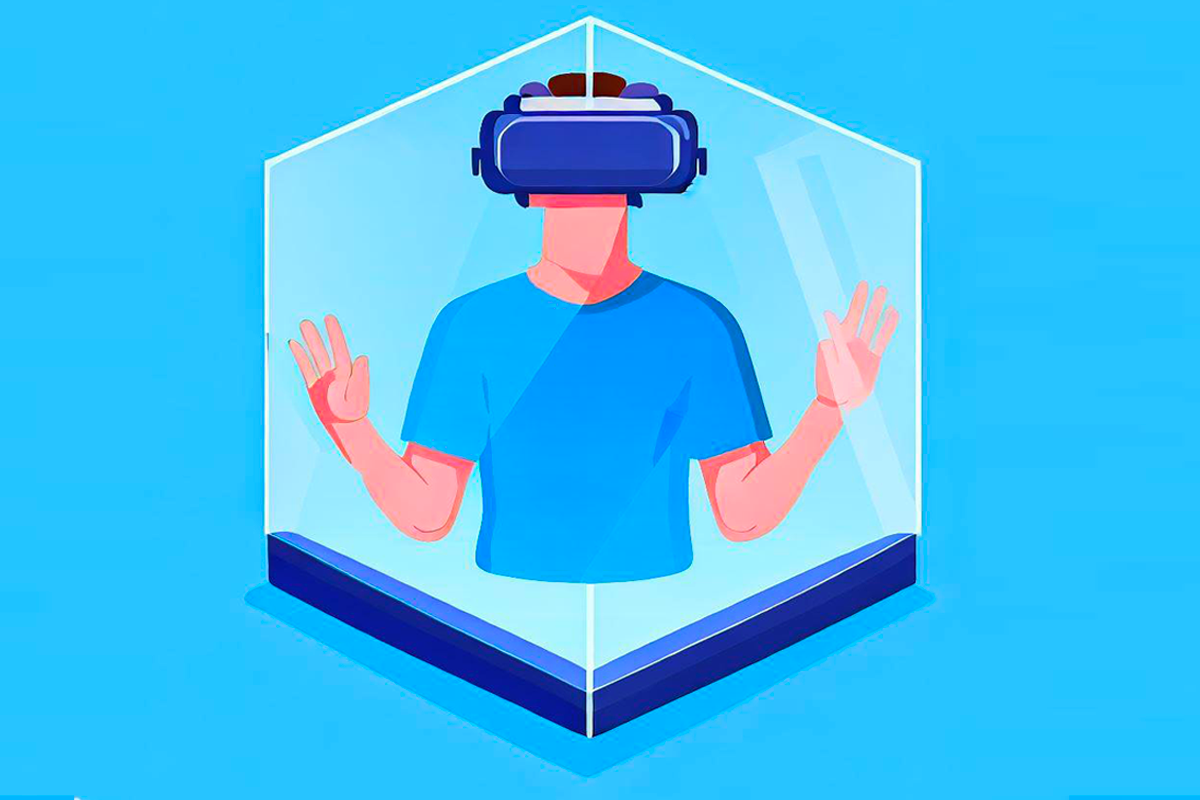



Augmented Reality, often abbreviated AR, has in recent years developed from being an experimental technology into a more applicable tool across many digital contexts.
Where AR was previously mainly associated with entertainment and technological gimmicks, the technology is now used more strategically within areas such as digital marketing, e-commerce, and user experience.
AR makes it possible to combine digital elements with the physical world and create interactive experiences that are based on the user’s real surroundings.
This gives companies new opportunities to engage their target audience, communicate complex messages, and create more present and immersive digital touchpoints.
Let us take a closer look at what AR actually is, how the technology works, and how it can be used in practice, with a particular focus on digital marketing.
What is augmented reality?
Augmented Reality is a technology that places digital layers on top of the physical world.
These layers can take the form of graphics, animations, text, or sound that are displayed directly in the user’s field of view via a smartphone, tablet, computer, or specialized AR devices.
In contrast to Virtual Reality, where the user enters a fully digital universe, AR keeps the user in the real world, which is simply expanded with digital elements.
This makes the technology more accessible and easier to integrate into everyday use.
AR uses cameras, sensors, and software to register the surroundings and place digital objects correctly in relation to the user’s perspective.
The result is experiences that feel more contextual and relevant, because they are based on the user’s current situation.
Why is AR relevant in digital marketing?
At a time when consumers are constantly exposed to digital messages, it is becoming increasingly difficult to maintain attention.
Traditional ads and static content are quickly overlooked, while interactive and engaging formats have greater potential to capture interest.
This is where AR can play a central role. By inviting users to actively participate, AR creates an experience rather than just delivering a message.
This can strengthen attention, memory, and the relationship with the brand.
In addition, AR can help reduce the distance that often arises in digital customer journeys, where consumers cannot see, try, or physically interact with a product.
In this context, AR can act as a bridge between the digital and the physical.
Typical uses of AR
AR can be used in many different ways depending on industry, target audience, and purpose.
Below are some of the most common and practical applications within digital marketing.
Product visualization
One of the most widely used forms of AR is product visualization.
Here, users are given the opportunity to see how a product will look in real life before completing a purchase.
Examples include:
- Furniture placed virtually in the home
- Glasses, watches, or makeup tried on digitally
- Electronics or interior items shown in correct size and context
Product visualization can reduce uncertainty in the purchasing process and provide users with a better basis for decision making.
For companies, this can also lead to fewer returns and higher customer satisfaction.
Interactive campaigns and branding
AR is also used in campaigns where the primary goal is to create attention, engagement, and brand experiences.
In these cases, AR functions as a creative element that differentiates the campaign from traditional formats.
Examples include:
- Print ads or posters activated via the camera
- Interactive experiences in urban spaces
- Gamification elements where users participate actively
This type of AR campaign is often well suited for social media, where users share the experience and extend the campaign’s reach.
AR in e-commerce
Within e-commerce, AR can play an important role in optimizing the user experience. When consumers are able to interact with a product, a greater sense of confidence in the purchasing decision emerges.
AR can contribute to:
- Better understanding of product functionality and use
- Increased time spent on the webshop
- Higher conversion rates
For many webshops, AR therefore functions not only as a branding tool, but also as a performance oriented element in the digital sales strategy.
Education, guides, and onboarding
AR is increasingly used for knowledge sharing and instruction.
By visualizing information directly in the context where it is applied, complex processes can become more intuitive.
Examples include:
- AR based product manuals
- Step by step guides for installation or use
- Employee training and onboarding
This type of application can lead to better understanding, fewer errors, and a more efficient user experience, even after the purchase.
Advantages of using AR
There are several advantages to integrating AR into digital marketing efforts, especially when the technology is applied with a clear purpose.
Increased engagement
AR requires active participation from users, which often results in higher engagement compared to traditional formats.
Users become part of the experience rather than passive recipients, which can strengthen the relationship between brand and user.
Reduced purchase uncertainty
When users can see and try a product digitally, doubt and uncertainty are reduced.
This can have a positive impact on both conversion rates and customer satisfaction.
Market differentiation
Although AR has become more widespread, not all brands use the technology strategically.
A well executed AR solution can therefore function as a differentiating factor.
Challenges of AR
Like other digital technologies, AR also comes with certain challenges.
Technical complexity
Developing AR solutions can be resource intensive and often requires specialized skills.
This places demands on budget, maintenance, and technical understanding.
User adoption
Not all users are equally familiar with AR. If the experience is not intuitive or easily accessible, it may lead to low usage.
Risk of lack of relevance
One of the biggest pitfalls of AR is using the technology without a clear purpose. If AR does not add real value, the experience risks being perceived as a gimmick.
How AR is implemented in practice
To succeed with AR, it is important to work in a structured and strategic way.
Define goals and purpose
Start by clarifying what AR should contribute. Is the goal increased engagement, better product understanding, higher conversion, or branding?
Know the target audience
The AR experience should be tailored to the target audience’s needs, technical level, and context.
A solution that works for one audience is not necessarily relevant for another.
Choose the right platform
Today there are many ways to implement AR, from web based solutions to social media and apps.
The choice should depend on where the target audience is most active.
Test and evaluate continuously
As with other digital initiatives, AR solutions should be tested and optimized on an ongoing basis.
Use feedback and data to improve the experience over time.
AR as part of the overall customer experience
AR should rarely stand alone, but instead be part of a broader digital strategy.
When AR is combined with content marketing, social media, e-commerce, and customer service, the technology can contribute to a more cohesive and engaging customer experience.
AR as a practical tool, not just a trend
Augmented Reality is no longer just an experimental format. When applied correctly, AR can function as a practical tool that creates value for both users and businesses.
When the technology is used with a focus on relevance, usability, and clear objectives, AR can contribute to more engaging marketing and stronger digital experiences.
In short, AR makes it possible to bring digital messages closer to the user, in the context where they make the most sense.






Comments