

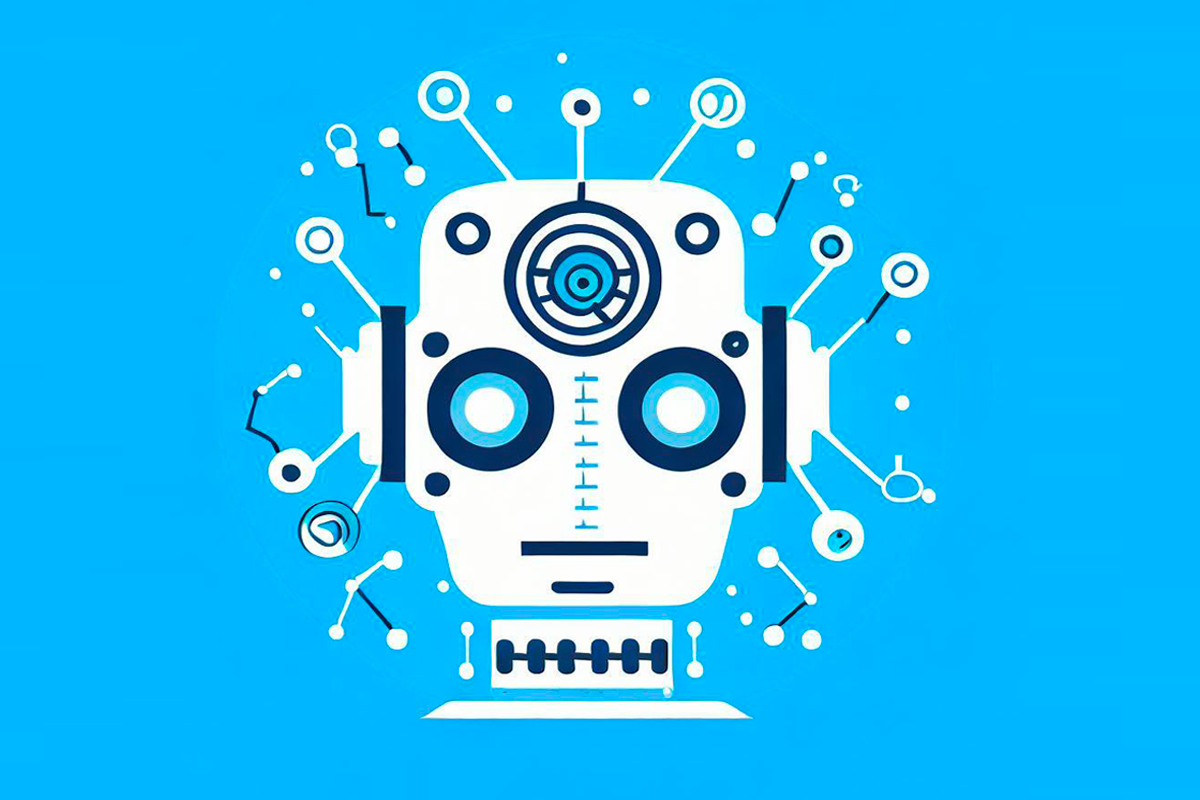



For many companies, chatbots represent an opportunity to automate repetitive tasks, improve the user experience, and free up time and resources for more value-creating work.
In this article, we take a closer look at what chatbots are, how they can be used effectively in digital marketing, the advantages and challenges associated with them, and how you can best work with automation without compromising the user experience.
What is a chatbot?
A chatbot is a digital tool that can simulate a conversation between a user and a company via text or voice.
Chatbots come in many forms and can be integrated on websites, in apps, on social media, and in internal systems.
Chatbots can be divided into two main types:
One type is rule-based chatbots, which operate according to predefined flows and responses.
These chatbots follow predetermined conversation flows and respond to specific user input.
The other type is AI-based chatbots, which use machine learning and natural language understanding to interpret the user’s intent and provide more flexible, contextual responses.
The choice between these types largely depends on the chatbot’s purpose, the complexity of the tasks it needs to handle, and the company’s technical and organizational maturity.
Why are chatbots relevant in digital marketing?
In a digital environment where users expect quick responses and personalized communication, chatbots can play a central role.
They allow companies to be available around the clock and meet user needs the moment they arise.
According to Glassix, chatbots can improve conversion rates by up to 23%, enhance lead quality, and create more relevant user journeys.
By asking the right questions and guiding users forward, chatbots can function as a digital assistant, helping clarify needs and preferences.
At the same time, chatbots generate valuable data on user behavior, questions, and challenges.
This insight can be used to optimize content, campaigns, and overall marketing strategies.
Typical applications of chatbots
Chatbots can be used in many different contexts, but some of the most common use cases in digital marketing include customer service, lead generation, onboarding, and support.
In customer service, chatbots are often used to answer frequently asked questions, handle simple inquiries, and guide users to relevant resources.
This reduces the burden on support teams and ensures faster response times.
In lead generation, chatbots can qualify visitors by asking about needs, budget, or areas of interest.
In this way, potential customers can be segmented and sent to the appropriate sales channels.
Chatbots are also used in onboarding processes, where new users or customers are guided through features, services, or products.
Automated conversations here can help reduce churn and increase activation rates.
Benefits of using chatbots in digital marketing
One of the biggest advantages of chatbots is efficiency. By automating repetitive and time-consuming tasks, companies save both time and resources.
This allows employees to focus on more complex tasks where human insight and empathy are necessary.
Additionally, chatbots contribute to more consistent communication across channels.
Whether the user contacts the company via website, app, social media, or customer service, the chatbot ensures information, tone, and responses remain consistent.
This supports a streamlined omnichannel experience, where the user perceives the company as a single entity rather than separate channels.
Chatbots are also relatively easy to scale.
While human support requires additional resources as demand increases, a chatbot can handle multiple conversations simultaneously without extra costs.
Finally, chatbots enable the collection of structured data on user needs and behavior.
This data can be used for continuous optimization of both the chatbot and other digital communication.
How to work strategically with chatbots
To get the most out of chatbots, it is essential to start with a clear purpose.
What should the chatbot help with, and what problems should it solve for users?
Without a clear goal, a chatbot risks becoming an isolated experiment with little real value.
Next, define the target audience.
A chatbot for B2B leads will require a very different tone, structure, and complexity than a chatbot for customer service in an e-commerce company.
Understanding the audience’s needs and expectations is critical.
It is also important to map the user journey.
Where in the customer journey does it make the most sense to introduce the chatbot, and how should it guide the user forward?
Here, the chatbot should complement existing content and channels rather than replace them.
Tone of voice and user experience
A often overlooked factor in chatbot work is tone of voice.
A chatbot directly represents the company, and its language should reflect the brand’s personality and values.
Working with personas to define the chatbot’s voice and response patterns can be helpful.
For a SaaS platform, a professional and neutral tone may be suitable, while an e-commerce company might benefit from a friendlier, more personal approach.
The key is that conversations feel natural and helpful, allowing users to easily ask new questions or be directed to a human if the chatbot cannot assist.
How to set up a dialog flow
To ensure the chatbot responds appropriately to user input, planning a dialog flow is important.
Start by mapping the most common questions users ask, then define clear responses and any follow-up questions.
Organize the answers into a flow that guides the user forward and test it with actual users to ensure natural responses.
This is an ongoing process: small adjustments to questions, response options, or tone can significantly impact user experience and engagement.
Integration with other marketing tools
Chatbots perform best when integrated with other systems and tools.
Integration with CRM systems, email marketing platforms, and analytics tools allows for more coherent and personalized user experiences across channels.
For example, when a chatbot is linked to a CRM system, conversations can enrich contact data with information about needs, interests, and buying journey maturity.
This data can then be used for more precise lead scoring and segmentation.
Similarly, email marketing integration can automatically trigger relevant email flows based on the user’s interaction with the chatbot, such as follow-up emails, onboarding series, or offers tailored to specific needs.
Additionally, chatbot data can inform advertising and campaign optimization.
Insights from conversations can adjust messaging, targeting, and content so marketing better reflects users’ actual questions and challenges.
In this way, the chatbot becomes not just a support tool but an active, valuable part of the overall marketing automation strategy.
Measuring and optimizing chatbot performance
To assess the impact of chatbots, it is crucial to define clear and relevant KPIs aligned with their purpose.
Depending on the use case, metrics may include engagement rate, number of completed conversations, conversions, average conversation length, or user satisfaction.
However, measuring numbers alone is not enough.
Continuous analysis of conversation logs provides valuable insight into how users interact with the chatbot in practice.
It helps identify where users drop off, which questions repeat, and where the chatbot fails to provide sufficiently clear or relevant answers.
These insights should actively inform optimization of content, flows, and phrasing.
Small adjustments to questions, response options, or tone often significantly improve user experience and performance.
By consistently measuring and optimizing, the chatbot can evolve with changing user needs and behavior, maintaining its value over time.
When chatbots do not make sense
While chatbots can be effective tools, they are not always the right solution.
In situations requiring high empathy, complex advice, or legal precision, human contact is often indispensable.
Additionally, very narrow target audiences or low traffic can make investment in chatbots less profitable. In such cases, other forms of automation or personalized communication may be more effective.
Chatbots as part of a long-term strategy
Chatbots should not be seen as a quick shortcut to automation but as a strategic tool that can be developed and improved over time.
When implemented with clear goals, understanding of the audience, and focus on user experience, chatbots can significantly enhance efficiency and quality in digital marketing.
Ultimately, it is not about replacing human communication but supporting it and creating better, more cohesive digital experiences.



Comments