

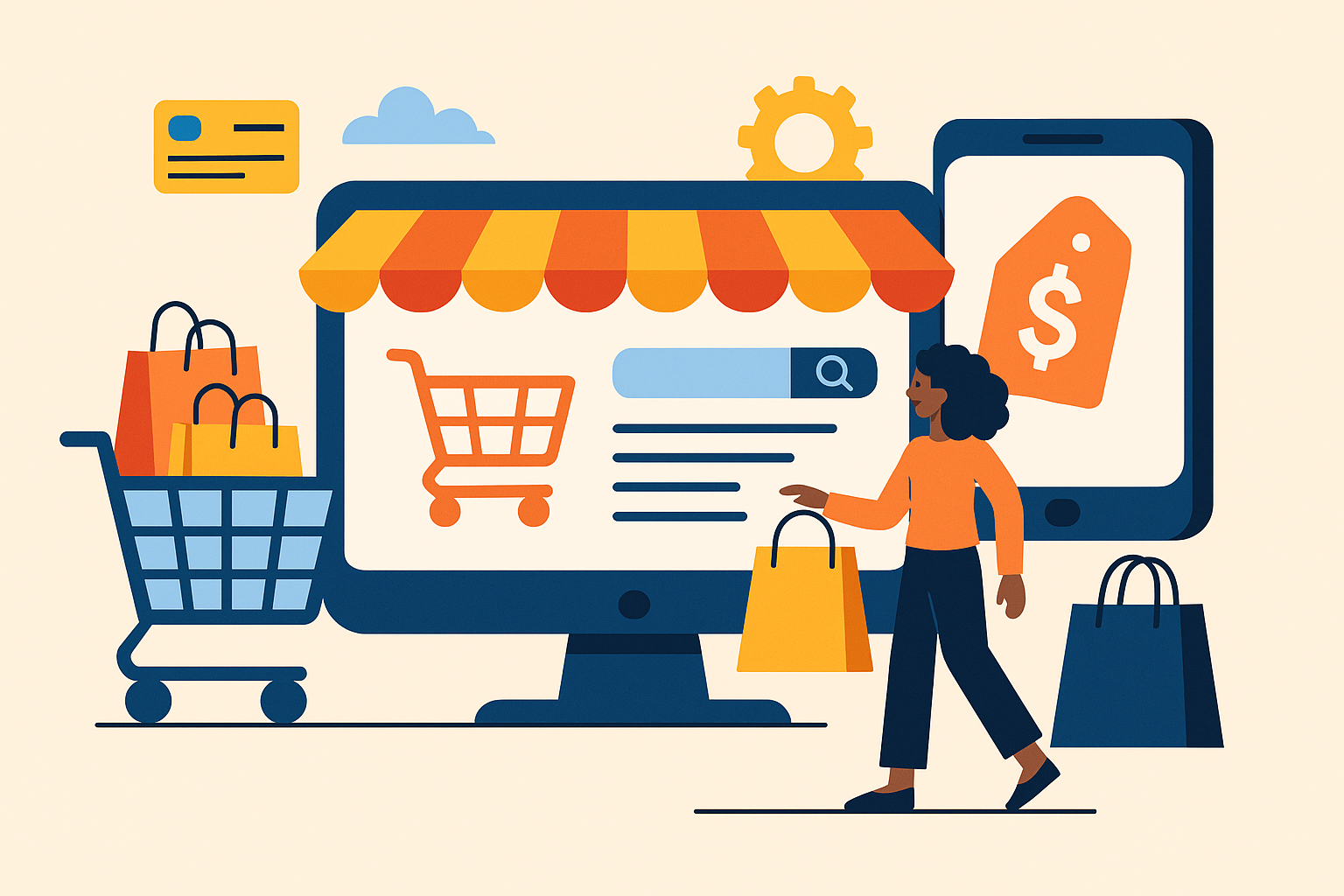



OpenAI has just launched a new feature in ChatGPT called Shopping and I believe it could have significant consequences for both search behavior and online advertising.
In short: you can now use ChatGPT to search for products, compare them, and get recommendations – similar to how you’d use Google. But here, a language model guides the experience.
However, this is more than just another feature. It’s a direct challenge to one of Google’s most profitable business areas: shopping searches.
Google’s cash cow: ads and e-commerce
To understand the potential of ChatGPT’s new direction, we need to look at the numbers:
- In 2023, Google generated over $237 billion USD in ad revenue (Statista).
- Most of this came from Google Search and Shopping Ads.
- “Commercial intent” searches (users looking to buy something) are the most valuable clicks in Google’s ecosystem.
This is exactly where ChatGPT Shopping is positioning itself. Not necessarily by replacing it, but by offering an alternative buying journey, where AI acts more like a shopping assistant instead of just showing 10 blue links and four ads.
How ChatGPT Shopping works
When you ask a question like “best running shoes for wide feet,” ChatGPT now returns a set of curated product recommendations – with images, descriptions, reviews, and prices.
This data is pulled from the new Shopping Graph, which combines partner feeds (e.g. Instacart and Klarna) with real-time data from open sources.
This isn’t just another product list. It uses natural language understanding to evaluate which products best match your intent and filters information based on preferences, needs, and context. It’s a kind of personal product assistant that goes far deeper than traditional keyword matching (Wired).
What does it mean for e-commerce professionals?
If you sell products online, whether you’re a brand, DTC shop, or agency, you need to be aware that product search is shifting. Not away from Google entirely (yet), but into an alternative ecosystem where visibility may not come from paid ads.
That’s why it becomes critical to ensure:
- Structured product data: name, price, images, descriptions, review scores, variant details
- Schema markup: make sure your shop provides correctly structured data that LLMs can read
- Product descriptions with context-rich descriptions: not just keywords, but meaningful content that can be interpreted in context
Is this a real threat to Google?
In short: Google still has the first-mover advantage, the ad platform, and the world’s largest search database. But user expectations are changing – especially among younger audiences.
Google dominates because it owns both traffic and transactions. But if ChatGPT becomes a top-of-funnel search assistant, and users start their research there, Google loses influence over the buying journey.
That’s exactly the shift that could eventually impact their ad revenue – and their core business.
What’s the current status?
ChatGPT Shopping has been rolled out to Plus users (GPT-4) and currently works mainly in the English version. It’s being improved continuously, and new partners are being integrated. It’s still in beta – but a very ambitious one.
OpenAI isn’t trying to “replace” Google, but rather become the first contact point for users who want an answer – not just a list.
What should you do now?
- Check whether your products are visible via feeds, schema, and proper indexing
- Rethink your product descriptions – are you writing for algorithms, humans, or LLMs?
- Keep an eye on ChatGPT’s evolution in the GPT Store, browser plugin, and native shopping features
This isn’t about choosing ChatGPT or Google. It’s about understanding that users are searching differently and future visibility will depend on whether language models can understand and recommend your products too.
Conclusion
With the Shopping feature, ChatGPT is moving seriously into commercial search – and that brings new demands for those working in marketing, SEO, and e-commerce. If you want to be part of where the buying journey begins tomorrow, now is the time to prepare.
AI and search are merging – and the question isn’t whether your products are shown. The question is whether they are chosen by the model.
FAQ: ChatGPT Shopping
What’s the difference between ChatGPT Shopping and Google Shopping?
The biggest difference is how products are shown.
Google Shopping gives you a list of products and ads, while ChatGPT acts more like someone helping you decide.
Instead of scrolling and comparing everything yourself, you get a filtered answer based on what you’re actually looking for.
It shifts the experience from “search and compare” to “ask and get a recommendation.”
For businesses, that means you’re not just competing on price or visibility anymore, but on how well your product fits the user’s needs.
What types of products work best in ChatGPT Shopping?
Products that need a bit of explanation or guidance tend to perform best.
Think electronics, fitness gear, beauty products, or anything where people usually have questions before buying. That’s where an AI assistant actually adds value.
Simpler products will still often be bought through traditional search. So, in reality, how much this gets used will vary a lot depending on the category.
How do I get my products recommended in ChatGPT Shopping?
It’s not just about being visible – it’s about being the best match.
Your product data needs to be complete but also written in a way that actually makes sense.
Descriptions should clearly explain who the product is for and what problem it solves. Reviews and ratings matter too, because they act as trust signals.
The shift is simple: you’re no longer optimizing for clicks, you’re optimizing to be picked.
How should I think about content with ChatGPT Shopping?
Content is no longer just about getting traffic – it’s also about being used.
Your content needs to be something LLMs can pull from when generating answers.
Guides, reviews, and comparisons still work, but they need to be more structured and more to the point.
If your content is easy to understand and reuse, you’re much more likely to show up in responses. The bar is higher, but so is the upside.
Can smaller ecommerce stores compete here?
Yes, and in some cases, they actually have an advantage.
It’s less about who has the biggest ad budget and more about who is the most relevant.
If your product fits a specific need better than bigger brands, you can get recommended.
But your data and content need to be sharp. LLMs can level the playing field on budget, but not on quality.
Does branding still matter in ChatGPT Shopping?
Yes, but in a different way than before.
It’s less about being everywhere and more about being trusted.
If your brand consistently shows up with strong signals across different sources, you’re more likely to be recommended.
That means brand building still matters – maybe even more than it used to. You can’t just buy attention anymore; you have to earn it.
How important is customer data in this kind of shopping experience?
It’s a big deal. The better the model understands the user, the better the recommendations.
That puts companies with strong first-party data in a much better position.
At the same time, you need to balance personalization with privacy. Companies that get that balance right will have a clear edge.
What happens to affiliate marketing with ChatGPT Shopping?
Affiliate marketing will likely change quite a bit. If recommendations happen directly inside ChatGPT, there’s not always a reason for users to click through an affiliate site.
But new opportunities will show up around data, feeds, and integrations. So, it’s not going away – it’s just evolving. The people who adapt early will still win.
Will price comparison sites become irrelevant?
Not completely, but their role is definitely shifting.
Instead of being a place where users go to compare, they may become more of a data source behind the scenes.
ChatGPT can already pull together the kind of information users used to find on those sites. That puts pressure on their position in the buying journey.
Going forward, they’ll need to rethink where they add value.
What’s the biggest challenge with ChatGPT Shopping?
The biggest challenge is not really knowing why things happen.
When an AI recommends (or ignores) a product, you don’t get the same level of insight as you do with SEO or ads.
That makes it harder to optimize.
On top of that, small changes in the model can have a big impact on your visibility. So instead of chasing quick wins, you need to think more holistically about your data, brand, and content.




Comments