





Searches – something you’re definitely familiar with.
We Danes search a lot – especially via Google.
In fact, over 70% of all purchases in Denmark begin with a search on Google.
But do you remember your internal searches?
Internal searches are valuable. If you have a website, there’s a good chance you have an internal search engine. On content-heavy and informative websites, as well as on webshops, it’s a good idea to implement a search engine – it can turn out to be a great source of additional revenue. What’s not to like?
Let’s take a closer look.
How to find your searches
You can use Google Analytics’ setup for tracking search terms. This means you can see what people search for when they navigate your site.
You can also see whether your visitors make a purchase after conducting a search on your site. This is where there’s a lot to gain – so pay close attention.
Internal searches convert 4–5 times better than visits without a search. So if you can guide people to the most relevant landing page, there’s significant sales potential.
Where to find it
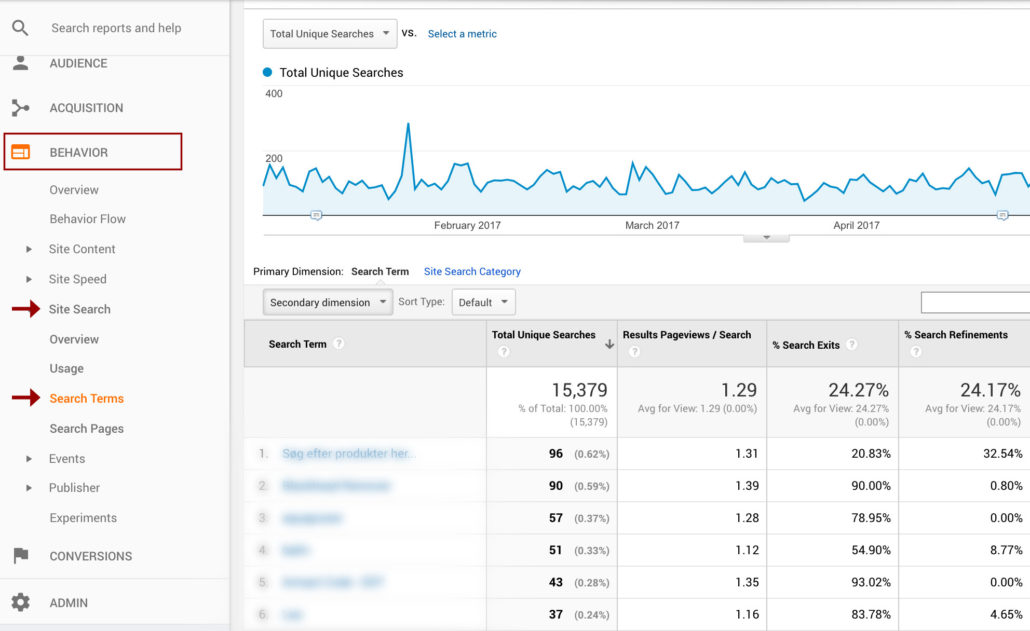
Other tools
The best search integration I’ve tried is Clerk.io (and I’m not getting paid to say this). Their functionality is excellent for calculating how much revenue you’re losing when people can’t find what they’re looking for. Their software also provides useful recommendations.
New products?
Set an alert for yourself.
You should check your internal searches every week. Because internal searches hide a goldmine of new product opportunities for your webshop.
Your customers know exactly what they want, and you can see this by reviewing what they search for in your internal search engine.
If a specific product or search term is searched for frequently, it’s a great idea to stock that product – if you don’t already have it!
Give users what they want
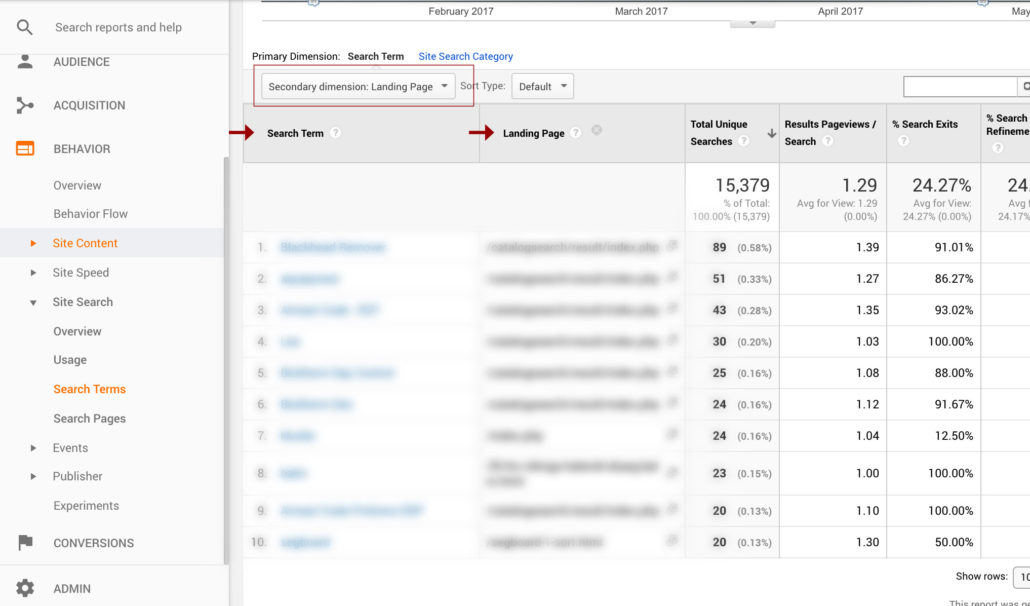
Not selling anything when people use the search function on your site? Or is your bounce rate high in Analytics? Then check which landing pages users end up on after searching. Maybe they’re not relevant in relation to what was searched?
If you choose “secondary dimension” in Google Analytics, you can see which landing page people arrive at.
Move your categories around
By reviewing your internal searches over a year, you’ll see seasonal trends and learn which products your customers are interested in and when.
This may lead to restructuring your menu items and homepage based on seasonality.
Search volume for a phrase like “gifts for him” is probably high in December – so you know you need to make content related to this more accessible during that month.
By analyzing or monitoring your internal searches, you can also improve your menu structure and get a solid idea of which banners to highlight in different seasons.
Your searches are content gold
When reviewing your internal searches, apply a filter to highlight “question words” – that is, interrogatives like how and why.
Can you guess what we’ll use those question words for?
Of course, we’ll use them to create content marketing!
The ultimate guide to content marketing
If a user has typed “how to get rid of dandruff?”, then you know what to write in your next blog post. Or maybe it’s time for a video? This way, you’ll create real, useful content that delivers value by addressing actual questions. Clever, right?
Don’t have a blog? Get started today!
How to start a blog from scratch
You can also apply this filtering to your AdWords keywords and through search terms in Search Console.
Are you making use of your internal searches?









Comments