





As part of this series of posts where I dive into how I would market different industries, it is now time to take a closer look at the tattoo craft.
Recently, I had a great trip to Dubai with my friend Daniel, who not coincidentally (for this post) also happens to be one of the best tattoo artists we have in Denmark. It was our trip, conversations, and brainstorming that led me to write this post.
Previous industries I have covered:
- Marketing for a watch dealer
- Marketing for a DJ
- Marketing for a bike shop
- Marketing for a bakery
The tattoo industry is one I personally find particularly interesting to explore from a marketing perspective, as it has grown significantly thanks to the rise of social media. Tattoo artists have gained the ability to reach new audiences across borders and showcase their craft in new and innovative ways.
The market, in other words, is no longer the same as before; increasingly, tattoo artists rely on their social media reach to attract clients and develop their talent.
There are therefore many factors to consider when marketing a tattoo artist, which makes it exciting to dive into some of the key elements I believe are crucial for the right marketing strategy. It is also fascinating to look at industries that are not digital-first through digital lenses – especially since this is a billion-dollar industry with massive potential.
I should also note that I am not a tattoo artist myself. So, if you are holding the needle or running a studio, I apologize if I step on your toes – this is only meant as tips and tricks.
Let’s get started.
Why are you unique? Personality creates rockstars
Whether you are a freelance tattoo artist or run a studio, it is essential to stand out from the crowd and offer styles and designs that are personal, unique, and aligned with what your target audience is looking for. That may sound like a tall order, but hear me out!
With platforms such as Pinterest and Instagram overflowing with tattoo content, potential clients have an enormous catalog to consider before choosing the right artist. This means you need to stand out with unique designs, promote an authentic experience, and dare to show your personality.
This can be done either via your business or personal Instagram profile, as well as through your website. Here are some examples of how to stand out from the crowd:
- Take clients and followers behind the scenes in the design process – create stories or posts that show your personal workflow.
- Gain insight into what your followers want to see from you – create engagement on Instagram and let followers suggest motifs or themes they would like to see your take on.
- Be open about why you personally love stepping into your studio – make a video tour showing what clients can expect.
One should not forget that getting a tattoo is an authentic experience and above all a collaboration between client and artist.
If potential clients already have an impression of who you are as a person, what style you work in, and what kind of experience they can expect before they even walk into your shop, the chances are simply higher that they will reach out to you.
In other words: use your personality and stand out among the flood of Instagram posts and profiles all competing to offer the best tattoos.
You have a limited window, and it is equally important to create content afterward that can always be reused for promoting your technical skills.
Advertising is still good fuel
Since social media has given tattoo artists a platform that reaches far beyond city and country borders, it’s natural that there are countless profiles to scroll through, all offering creative designs and cool tattoos.
For this reason, your profile needs to stand out. Here, it makes great sense to start advertising your website as well as your profile – advertising remains the fastest way to grow on Instagram and attract more clients to the shop.
My clear advice is to turn up the advertising efforts. This applies whether you are a tattoo artist or a studio. Consider how your business can appear as sharp as possible in a short video or single image. Your target audience has surely seen a few Instagram ads for tattoos already – so how can you be as unique as possible?
For some audiences, it may be enough with a short video showing the tattooing process in a simple way that inspires users to take part.
For others, it might be a creative presentation of the studio atmosphere, giving them a sense of what to expect when stepping in.
The strategy I have used for the studios I’ve worked with has always been to push existing content that already performed well organically to relevant audiences.
Some audience types that have worked well for me:
- Look-a-like – 5% – based on IG engagement
- Look-a-like – 5% – based on past bookings (if you have enough data)
- Look-a-like – 5% – based on email list
- Detailed targeting – interests: Tattoos + Engaged shoppers
I also always separate campaigns into prospecting and re-marketing.
Prospecting aims to reach new potential clients, while re-marketing aims to activate existing ones.
When I have had the chance to run ads for tattoo artists, I often managed about 150 ads at the same time – just to give an idea of the scale. These were distributed across placements such as feed, stories, and reels, with video often performing the best.
Tip: I find it interesting that many tattoo artists are willing to spend 10,000 DKK/month on all sorts of things, but when you tell them to spend the same on marketing, they look like they’ve lost their cookies. If you want to stand out, you have to invest.
Lead ads – the best form of personal marketing
Lead ads are your email marketing on steroids.
The best part about lead ads in the tattoo industry is that you can offer as many CTAs as people want to sign up for.
For example:
- Tattoo competition (if you want to get fully booked)
- Available slots (sign up)
- Inspiration for your next tattoo
- Join my waiting list
Then, create different segments in your email marketing.
If you use a system like Drip, you can easily create flows, meaning automated emails based on customer or lead behavior.
I always use lead ads no matter the case – and they work, even in the B2B world.
Content is king
The process of getting a tattoo looks amazing in both photo and video content, since both the finished product and the creative process can be visualized in many creative ways. And that’s fortunate, because marketing a tattoo artist requires content!
If you have a website (which I strongly recommend), I suggest collecting all relevant content there – even what might not look as polished on social media.
Tattoo artists I personally find inspiring:
Clients can naturally be directed from Instagram to the website to explore what your business offers. Types of content I believe are valuable for a website include:
- Short, personal bios of each artist including a selection of their work.
- Step-by-step information about the process – from design choice to booking to the healing procedure.
- Clients’ personal experiences and testimonials.
- Sharp photos of the shop – so customers know what to expect before walking in.
Content on social media
Since much of the marketing is still focused on social media, it’s natural that potential clients search Instagram to find the artist they want to bring their project to life.
Instagram has become a portfolio for many artists, showing at a glance the style and colors they work with, and which projects they can execute.
Over time, this portfolio has evolved, with creative ways of showcasing skills – for example, Instagram reels, which present the process more naturally than photos alone can.
I believe it takes a strong combination of skills and personality today.
People want to know who you are while also seeing what you can do. That’s something Daniel, my own tattoo artist, is great at.
It’s also worth mentioning TikTok, which has revolutionized tattoo marketing because video content can present the artist’s style, personality, and client experience in new ways.
That said, I still have doubts about how strong TikTok will be as a sales channel – time will tell.
Tip: Many tattoo artists have completely abandoned Facebook. I don’t fully agree. Even if you don’t use it personally, Facebook still has millions of active users and offers viral potential. Posts with comments can appear in others’ feeds, creating exponential exposure. Since you’ve already made content for Instagram, why not share it on Facebook too? It requires minimal effort.
No matter which platform works best for you, remember: content is king, and it’s always about creating your own universe.
As mentioned earlier, standing out from the crowd is essential. If you find your own personal way to showcase your finished projects, your chances of being chosen increase.
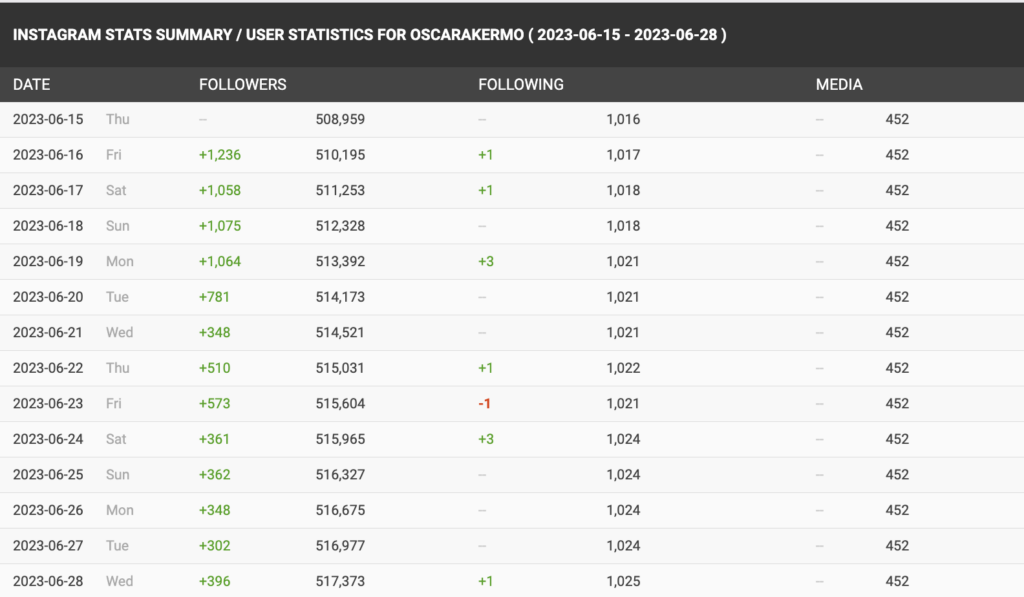
Keep an eye on your social media growth
There are many tools for this. Personally, I use Socialblade because it’s free. If you want even deeper data, you could consider using Woomio, which tracks influencer performance.
Below, I pulled follower data for Oscar Akermo per day in June.
You can also see their engagement ratio on Socialblade.
Continuity
Tattoos take time; both designing them and inking them onto skin. When I talk about impressive Instagram portfolios that attract clients, it’s important to remember that a full profile filled with sharp designs doesn’t appear overnight.
It’s about playing the long game and accepting that building your business and portfolio takes time.
It requires people walking into your shop, building strong relationships with clients and the industry, and above all patience.
With consistent posts of cool designs, personal stories showing the process, or informative website content, clients quickly sense that this is a business with passionate tattoo artists who are in it for the long run.
Since this is a creative craft, it’s crucial to view it as an ongoing process – one that allows further development and continuous fine-tuning based on what your audience wants.
Keep challenging the industry and the platforms available – and find your own style.
Build processes
As a tattoo artist, your time in front of a screen for website and social media is limited.
That’s why it’s important to document the workflows that repeat in your business.
For example: What happens when a client emails you to book an appointment? Is there a fixed process? And what if the first contact comes via Instagram DM? Is the process the same or different?
Thinking through these questions can move your business to the next level. Few actually take the time to do this. My advice: build processes for your clients and yourself. This creates a smooth flow for both sides.
Getting control of repeat processes also gives peace of mind and makes it easier to hire an assistant to handle messages and emails.
Once documented, it’s easier to delegate the time-consuming tasks.
Guest tattooing
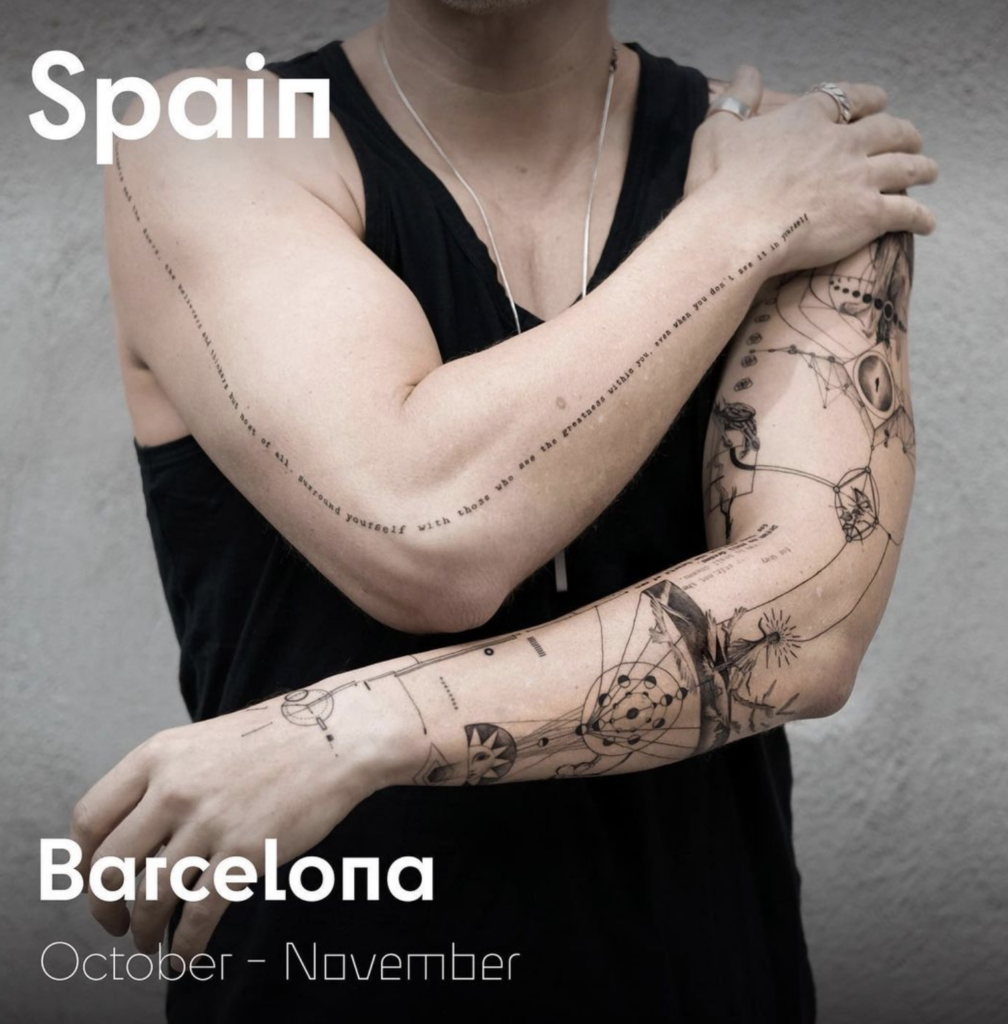
One opportunity many artists benefit from is guesting at other shops or larger conventions as part of marketing their skills. This creates opportunities to meet both other artists and clients who follow you online but haven’t had the chance to book yet.
If you’ve already built a reputation online, guest appearances generate significant attention since geography limits many clients from booking.
A good tip is to analyze your social media demographics to see where guest appearances make the most sense.
Guesting extends your reach beyond social media, offers chances to learn from other artists, and builds strong industry connections.
Since tattoo artists can often travel easily, there are plenty of opportunities to try guesting in a new city or even a new country.
A clever trick is to do local marketing before arriving. Don’t just leave that to the host studio.
For example:
Run a Meta campaign with a 10 km radius around the city, targeting “tattoos” (and optionally “engaged shoppers”). Make 5–10 ads with your best designs, stating you’ll be in town on specific dates. That way, you ensure bookings and possibly a waiting list.
I love how Ulas Yesilyurt always does these.
I’d definitely use them in his advertising if I ran his brand.
Website
With social media’s dominance, many bookings happen via DMs. But many clients want to do deeper research before booking. A website is essential here, as it gathers all relevant information in one place.
Clients may find plenty on social media, but a website often provides the final push to book.
Here, you can include details on the process, shop location, artists, healing procedures, products used, and more.
A contact form also simplifies bookings – allowing clients to describe the style and scope of their project and either request a specific artist or leave the choice up to the studio.
Websites also provide valuable data about your potential clients – gold for marketing.
Dashboard – via dashthis (know your numbers)
In marketing, whether for tattooing or other industries, having a clear overview of your numbers and progress is crucial. You must analyze the data and use it strategically.
Google Analytics (now GA4) is one tool, but I also recommend more user-friendly dashboards like Dashthis. It pulls data from all platforms (social media, Google Ads, etc.) into one performance overview.
Imagine running a studio – wouldn’t it be great to have a dashboard for each artist and one overall for the studio?
That way, you can analyze the areas most important to your business.
Start small with the most essential tools, then use reports strategically for further planning.
Read more about other tools I use in marketing here.
Searches for your brand
As mentioned earlier, a website with inspiring content can often be the final push for clients to book.
To make it as sharp and relevant as possible, I would also conduct a keyword analysis.
You can use Morningscore to track search volume for competitors and tattoo-related keywords, and follow their development.
This shows how many searches there are for your brand, monthly search volume for chosen keywords, and where your website ranks.
It’s also useful to benchmark against other brands and artists.
Tip: It’s very hard to create a market that doesn’t exist. If monthly searches for “tattoos” are low, that reflects audience behavior and interest. Global tattoo search volume is stable but varies month to month.
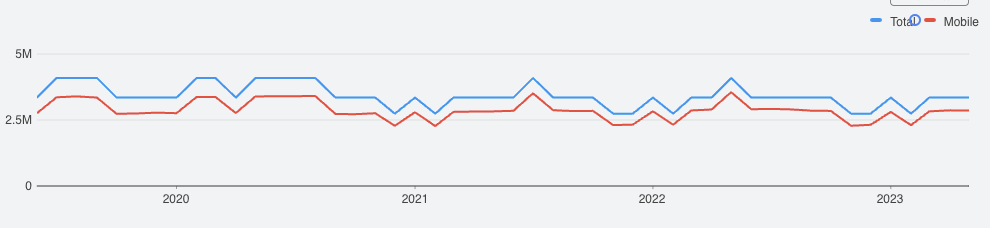
Based on this, you can select relevant keywords and ensure your website contains the right information to rank well.
For SEO, also make sure to:
- Optimize your site for mobile (most traffic comes from Instagram).
- Set up Google Search Console and submit your sitemap.
- Improve site speed by optimizing large media files and hosting.
- Add internal and external links where relevant.
PR articles worldwide
One of the biggest hacks I’ve used for entering new markets is strategically placed articles. Every media outlet sells ad space – meaning you can buy articles directly.
I personally use Bazoom, a marketplace for purchasing articles on major sites. Previously used mainly for link-building, today they also act as social proof in ads.
Below, I have logged into my Bazoom account.
Then I have created a category called Body Art. Here, there are 68 link options I could start with.
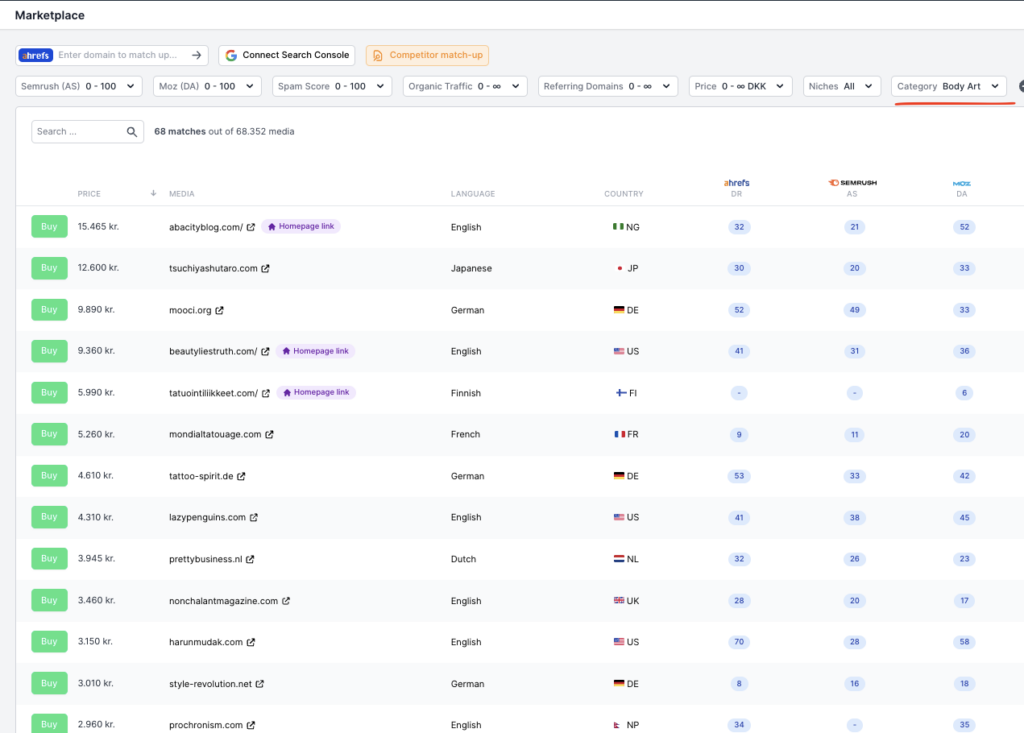
For example:
If opening in Los Angeles, you could buy local articles such as “European tattoo studio opens in L.A. this summer.” Then use that article in your L.A. ads targeting tattoo enthusiasts.
This way, you create your own PR.
Artificial intelligence
I believe the tattoo industry will greatly benefit from AI.
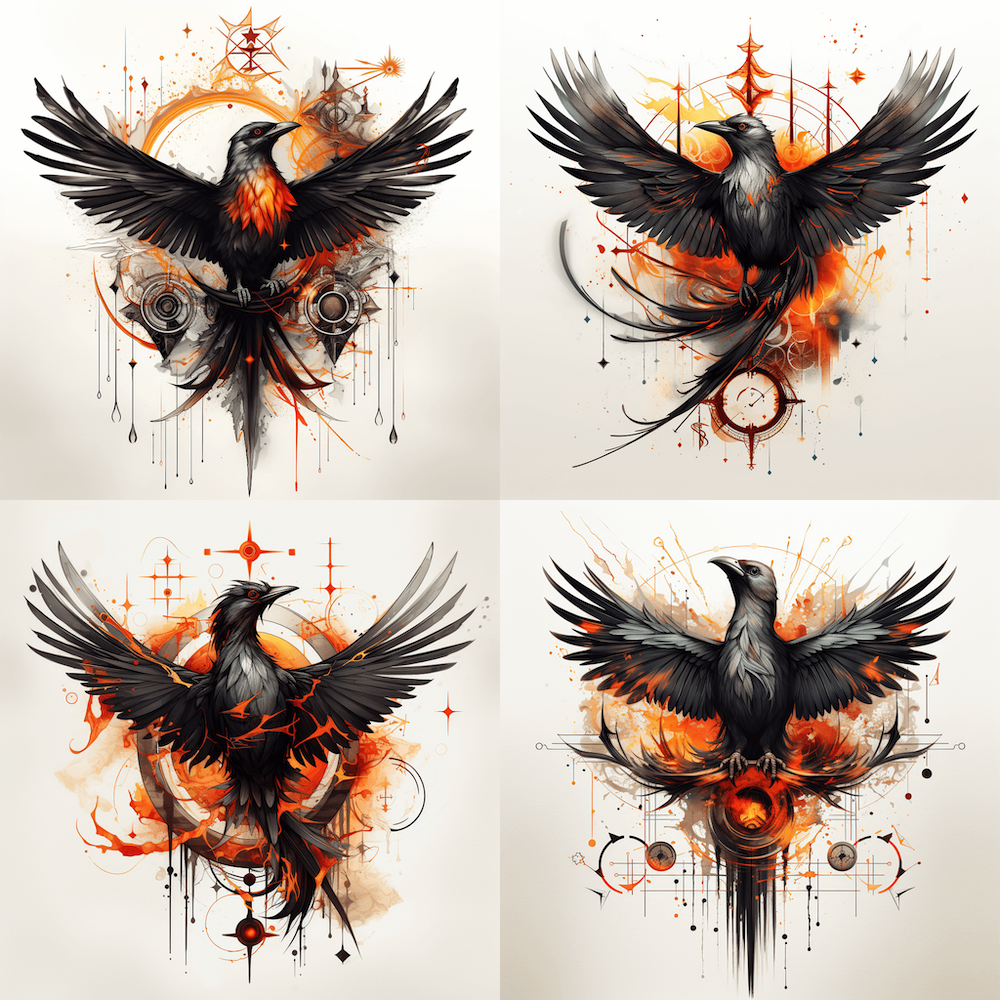
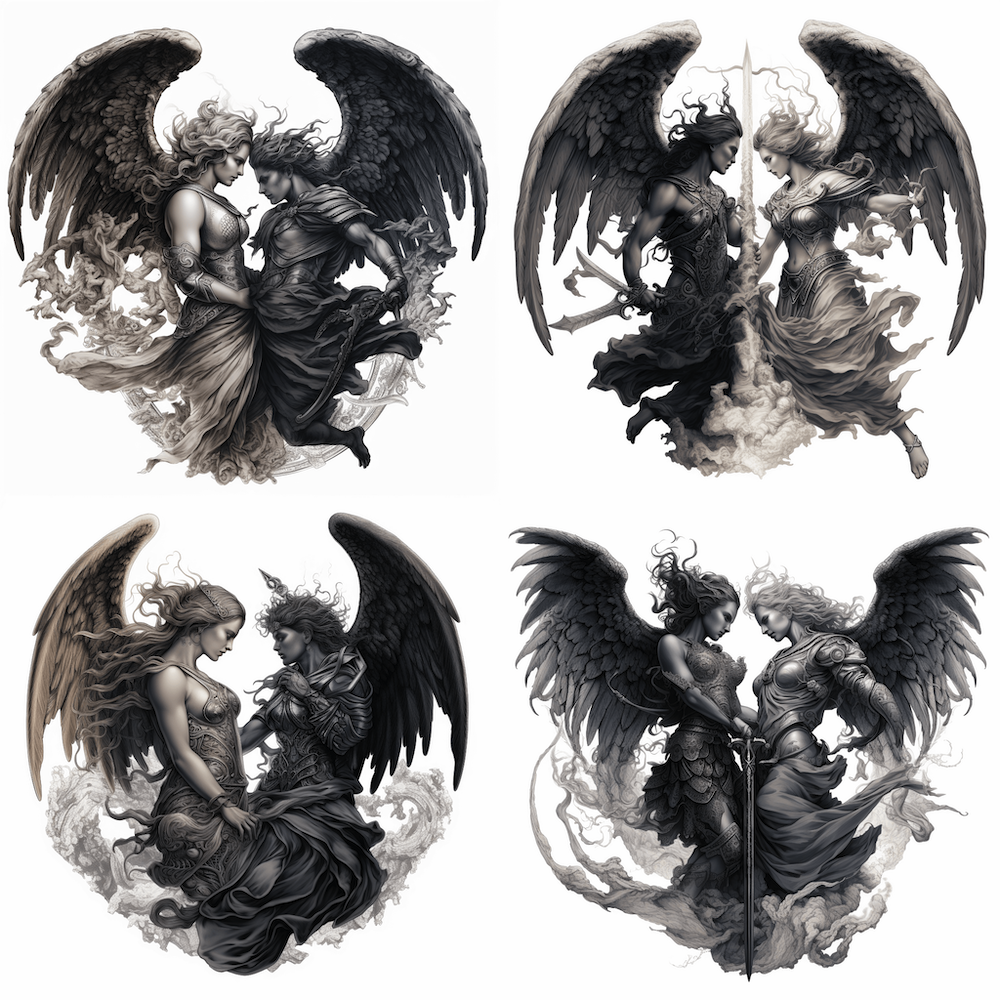
Tools like ChatGPT (with image plugin), Microsoft Bing Image Creator, and Midjourney5 are game changers.
Alongside Apple’s iPad Pro (with Procreate), these tools have revolutionized workflows.
Instead of drawing from scratch, you can quickly generate ideas and baseline designs with AI – still unique, but much faster.
I’ve tested this myself with prompts like:
“Minimalistic yet detailed black and grey tattoo of a woman’s face.”

“Vibrant phoenix rising from ashes in black and grey.”
“Angel and devil fighting in tattoo style.”
Offline promo
We must not forget that tattoos are essentially “living artworks.”
Each piece represents hours of work and skill from the artist, and when visible, it acts as a small showcase of their craft for life.
This form of promo is gold, as tattoos spark curiosity and referrals from friends.
Always make sure clients feel comfortable throughout the process and leave with personal pieces that inspire word-of-mouth recommendations.
That’s how many of my friends chose artists I’ve been tattooed by.
Did you make it this far?
Then I’m truly happy you stuck with me.
This turned out longer than expected – it happens sometimes.
Maybe you know someone in the industry who would benefit from this?
If so, I’d greatly appreciate a share.









Comments